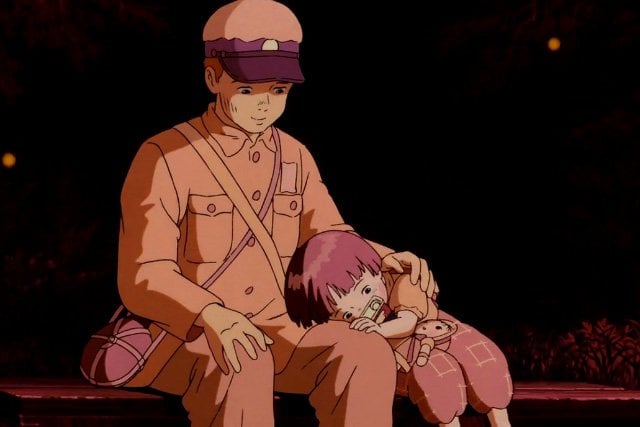
Japanese war anime movies show humanity’s darkest hours through a different perspective that focuses less on glory and more on grief and how war affects ordinary lives.
World War II and its aftermath serve as the backdrop for many of these powerful animated war films. They present one of humanity’s most catastrophic experiences through Japan’s unique artistic vision. These Japanese war anime movies tell emotionally devastating stories that resonate deeply, whether they follow orphaned siblings who must cross the countryside to survive or show citizens who endure unthinkable hardships.
These ten films stand as the most compelling and thought-provoking works that show the true cost of war through animation.
1. Grave of the Fireflies (1988)

Grave of the Fireflies, Isao Takahata’s 1988 animated masterpiece, stands as the most heart-wrenching portrayal of war’s effect on innocent lives that animation has ever captured. Studio Ghibli released it as a double feature with “My Neighbor Totoro,” creating a stark contrast. The film doesn’t hold back in showing suffering. It builds a dark moral universe through moments of quiet stillness.
This animated war movie hits hard because it mirrors real tragedy. Nosaka wrote it to honor his sister who died from lack of food during the war. He carried survivor’s guilt with him. Director Takahata had lived through similar events. He was just 9 years old in the summer of 1945 when he and his sister ran from an air raid. The attack destroyed half their city and killed over 1,700 people. These personal stories give the film a raw emotional truth rarely found in animation.
People often call it an anti-war film, but Grave of the Fireflies goes beyond such simple labels. Takahata never agreed with this view, in part because he didn’t want the film boxed into one category. The story works on many levels. It shows how dangerous childhood becomes in an adult world, how society fails its weakest members during crisis, and asks deep questions about morality itself.
2. The Wind Rises (2013)

One of Hayao Miyazaki’s best animated war drama movies is The Wind Rises. It doesn’t show the destruction of war but tells the story of someone whose creations would become weapons of war. This animated historical drama shows a fictionalized story of Jiro Horikoshi, the aeronautical engineer who created the infamous Mitsubishi A6M Zero fighter aircraft Japan used during World War II.
The story takes us through Jiro’s life from his childhood dreams of flying to his time at Tokyo Imperial University. His life changes during the Great Kanto Earthquake of 1923. This disaster destroyed 111,000 buildings and took 105,000 lives. It’s also where Jiro first meets Naoko. Japan faces tough times with the Financial Crisis of 1927 and the Showa Depression of 1929, but Jiro keeps chasing his dream to build beautiful aircraft.
The movie won many awards, including nominations for the Academy Award for Best Animated Feature and the Golden Globe Award for Best Foreign Language Film. It ended up winning the Japan Academy Prize for Animation of the Year.
3. In This Corner of The World (2016)
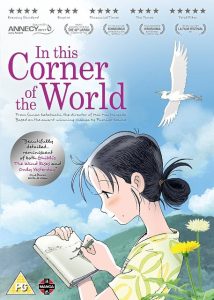
In This Corner of the World was released in 2016 and shows us what life was like for regular people in wartime Japan through a young woman’s story. Director Sunao Katabuchi and MAPPA studio created this animated war movie that brings to life the daily experiences in Hiroshima and nearby Kure during World War II.
The story is mainly based on a life of Suzu, an artistic dreamer from Hiroshima who says yes to marrying Shusaku Hojo at age 18, though she barely knows him. She moves to Kure to join her husband’s family and learns to be a housewife while dealing with the growing challenges of war. Food supply becomes scarce and air raids become normal, but Suzu finds clever ways to keep going.
Most war movies focus on soldiers and battles, but this one shows how regular people lived through impossible times. We see Suzu’s life with her family and how she deals with having less and less to work with. The film helps us learn about war through changed recipes, fixed-up clothes, and different daily routines.
4. Barefoot Gen (1983)
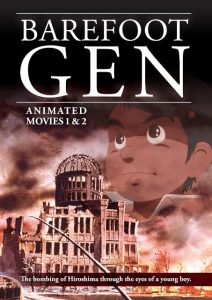
Barefoot Gen is one of the most raw Japanese war anime movies ever made. It shows the horrors of the atomic bombing through a child survivor’s eyes. Madhouse produced this animated adaptation in 1983 under director Mori Masaki. The story comes from Keiji Nakazawa’s semi-autobiographical manga series about his own experiences as a six-year-old Hiroshima survivor.
The story follows young Gen Nakaoka and his family during the World War II’s final days in Hiroshima, Japan. They face food shortages but stay hopeful as Gen and his brother Shinji help their father in their wheat field. Awfully everything changes on August 6, 1945, when a B-29 aircraft drops an atomic bomb on the city. The movie shows perhaps the most graphic scenes of nuclear destruction ever animated. Victims’ flesh melts from their bodies, eyes pop from sockets, and mothers hold their burning children – what a destruction it was!
The movie serves as both a historical record and a warning. The final scene shows Gen watching wheat grow in radioactive soil. This glimpse of hope amid total destruction symbolizes human resilience at our darkest hour.
5. Barefoot Gen (1986)
This 85-minute animated war movie takes place three years after Hiroshima’s devastation and shows the collateral damage of nuclear warfare that rarely gets told. Director Toshio Hirata follows Gen Nakaoka, his mother Kimie, and his adopted brother Ryuta as they fight to survive in post-war Japan.
Life is harsh for the trio who must scavenge for food and scrap metal to sell in the black market, showing post-war Hiroshima’s desperate economic state. Kimie starts working at a geta (traditional Japanese footwear) factory while Gen and Ryuta go to school in a crumbling building.
Radiation sickness casts an invisible shadow throughout this Japanese war anime movie. The story becomes sad when Gen realizes his mother’s illness is getting worse. The truth hits hard when doctors tell Gen his mother has radiation sickness with only four months left. The emotional peak comes when Kimie dies on Gen’s back during a desperate run to the hospital.
6. The Cockpit (1993)
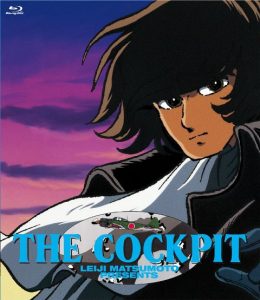
The Cockpit (1993) stands apart from typical war narratives by telling three powerful stories from the Axis viewpoint. This Japanese OVA series draws from Leiji Matsumoto’s World War II manga “Battlefield” and gives viewers a deeper look at soldiers who face moral dilemmas during history’s deadliest conflict.
Three different directors crafted distinct episodes that share a common theme: self-sacrifice. Yoshiaki Kawajiri directs “Slipstream,” the first segment about Lt. Rheindars, a Luftwaffe pilot protecting Germany’s ultimate weapon—the world’s first atomic bomb. The story builds tension as his former lover and her scientist father, who created the bomb, try to stop its devastating power from being released.
The second chapter, “Sonic Boom Squadron,” comes from director Takashi Imanishi. The story unfolds on August 6, 1945—the day of the Hiroshima bombing. We follow Ensign Nogami, a Japanese kamikaze pilot who feels dejected after failing his suicide mission but remains committed to serving his empire again.
This Japanese war anime deserves more attention for both its artistic excellence and deep philosophical insights.
7. Who’s Left Behind (1991)/Ushiro no Shoumen Daare
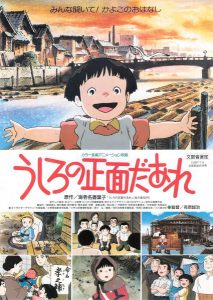
Who’s Left Behind? (1991) deserves more recognition than its famous counterparts. This touching World War II story unfolds through a young girl’s innocent eyes. The 90-minute wartime drama tells the story of 6-year-old Kayoko Nakane, drawn from Kayoko Ebina’s real-life memoirs. The story takes place in Tokyo from 1940 until the devastating fire-bombing of March 9-10, 1945.
Kayoko faces typical childhood challenges at the start. She struggles to fit in at school and deals with life as the first and only daughter among four brothers. Her older brother Kisaburo becomes her strongest supporter, and his protective nature grows more vital as war looms.
Japan’s descent into wartime hardship unfolds gradually. The Nakane family shows their patriotism by giving away their precious belongings to support the war effort, including Kayoko’s beloved doll.
Kayoko watches American B-29 bombers fly toward Tokyo with dread filling her heart about her family’s safety. Her injured brother Kisaburo brings news later about the devastating firebombing that claimed nearly 100,000 lives in one night. The animation quality shines brighter than earlier war films like Barefoot Gen, thanks to its production coming almost a decade later.
8. Hi no Ame ga Furu (1988)
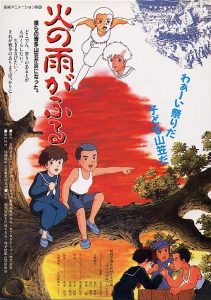
Hi no Ame ga Furu (Rain of Fire) is considered one of the best Japanese animated war drama movies. It documents one of World War II’s untold tragedies. Seiji Arihara directed and Mushi Productions produced this 80-minute feature that preserves the memory of Fukuoka’s devastating fire-bombing on June 19, 1945, through children’s innocent eyes.
Life in 1945 Fukuoka seemed normal, unlike other Japanese regions ravaged by war. The protagonist Daichi and other boys played war games with rival groups while school continued. They had no idea about the horror that awaited them. The story takes a crucial turn as Yoriko arrives. This young evacuee from Tokyo brings the harsh reality of war with her, having lost her family to bombing raids.
This Japanese war anime movie draws its power from showing life’s sudden split into “before” and “after” moments. Peaceful childhood scenes create a false sense of safety that shatters when American bombers appear in the sky. The film’s storytelling rings true because it draws from a book of eyewitness accounts.
Watch this masterpiece online!
9. Giovanni’s Island (2014)
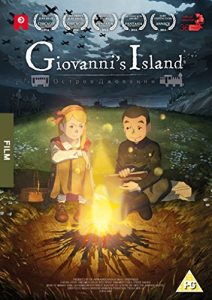
Giovanni’s Island (2014) tells an interesting story from post-WWII history—the Soviet occupation of Japan’s northern territories. The story unfolds in 1945 on Shikotan, a small island near Hokkaido’s coast. It follows ten-year-old Junpei and his seven-year-old brother Kanta during a time when their peaceful lives changed after Japan’s surrender.
The islanders initially expected American forces to arrive. Instead, the Soviet Red Army appeared, changed national borders, and forced Japanese residents to live alongside newly settled Soviet citizens. During this time of change, Junpei became friends with Tanya, whose father commanded the Soviet forces and now lived in Junpei’s former home.
The story takes its name and themes from Kenji Miyazawa’s classic “Night on the Galactic Railroad,” which becomes a symbol of hope as the children try to make sense of their new world. Life grew harder for the brothers who faced displacement from their home and experienced the harsh realities of internment camps and deep personal losses.
10. From Up on Poppy Hill (2011)
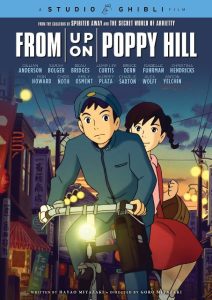
From Up on Poppy Hill takes a more subtle look at war’s lasting effects by focusing on the aftermath instead of direct conflict. The 2011 project brought together the father-son team of Hayao (writer) and Goro Miyazaki (director) for their first joint venture. They created a historical drama set during Japan’s post-war rebuilding period.
The story unfolds in 1963 Yokohama as Japan gets ready for the Tokyo Olympics. High school student named Umi Matsuzaki raises signal flags each morning to remember her father, who died when his supply ship struck a mine during the Korean War. This daily custom creates a connection with Shun Kazama, a newspaper club member who leads the fight to save their school’s historic clubhouse from demolition.
This top Japanese war animated film runs for 91 minutes and uses gentle nostalgia to show how nations balance progress with their historical identity.