Sumo wrestlers throughout history have accomplished some truly remarkable feats. Japanese fans call Taiho the greatest sumo wrestler of all time. He earned the prestigious rank of yokozuna by age 21. The sport also saw Futabayama set an incredible record of 69 consecutive wins that remains unbroken today.
The physical presence of Japan’s most famous sumo wrestlers amazes fans worldwide. Yamamotoyama stands out as the heaviest Japanese-born sumo wrestler in history. He tipped the scales at 265 kg (584 lb). The legendary Konishiki weighed 287 kg (633 lbs), making him the heaviest wrestler during his era.
Discover 7 legendary sumo wrestlers who shaped the sport and left a lasting legacy.
1. Taiho Koki: The Greatest Sumo Wrestler of All Time
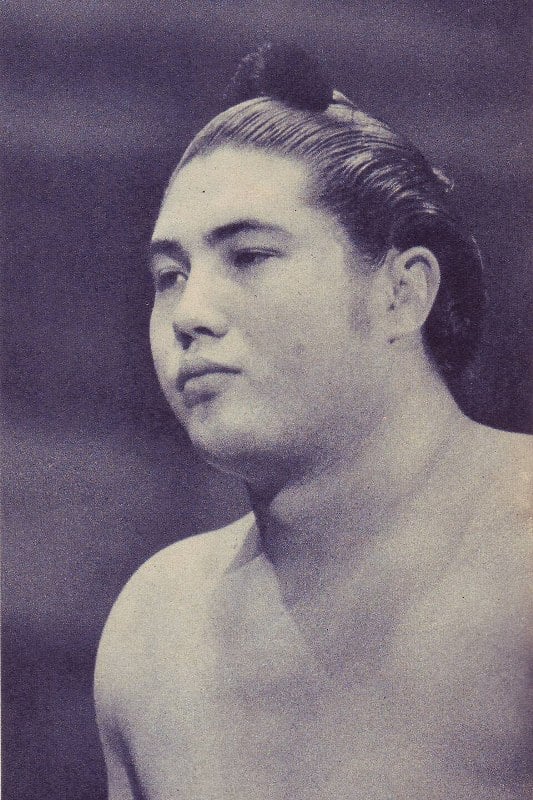
Born Ivan Boryshko on Sakhalin Island to a Ukrainian father and Japanese mother, Taiho emerged as a dominant figure in sumo wrestling. His mixed heritage didn’t stop Taiho (Japanese name Koki Naya) from becoming what many call the most powerful force in Japan’s national sport.
Early rise to yokozuna at age 21
Taiho started his path to greatness in 1956 when he joined professional sumo. He chose the ring name “Taiho” which means “great phoenix”. His natural talent shone through as he quickly climbed the ranks. He reached the top division by age 19, showing skills that went way beyond his years.
Taiho’s exceptional quality wasn’t just his quick rise but how well he performed at the top. He became what many believed to be the youngest champion in sumo’s 2,000-year history by winning his first Emperor’s Cup in 1960 at age 20. This remarkable achievement marked just the beginning of his reign at the top.
Taiho reached sumo’s highest rank of yokozuna at just 21 years and three months. This made him the youngest wrestler to reach this prestigious rank at that time. Only one wrestler broke this record later, and that too by just one month. He proved his worth right away by winning his first tournament as yokozuna – a rare feat for a new grand champion.
Record-breaking 45-match winning streak
Taiho won an impressive 32 tournaments between 1960 and 1971, setting a championship record that lasted until recently. His excellence was evident in his consistency—he won at least one championship every year while competing in the top division.
His ability to win consecutive matches sets him apart. He won six tournaments in a row twice, a feat no other post-war yokozuna matched until 2005. He also achieved eight perfect 15-0 tournament victories, showing just how much better he was than his competitors.
A comeback victory in September 1968 with a 14-1 record came after missing five straight tournaments. This win started one of sumo’s most celebrated achievements – a 45-match winning streak that continued into 1969. A controversial judging decision ended his streak, causing such an uproar that it led to the introduction of video replay in sumo.
Legacy in post-war Japan
Taiho won through technical brilliance rather than size alone. He stood about 6 feet 1 inch tall and competed at 220 pounds early on, later reaching around 320 pounds. His weight wasn’t remarkable in a sport where modern competitors can weigh over 500 pounds.
His expert use of leverage and balance helped him win nearly a third of his matches using yorikiri, pushing opponents out of the ring. He retired in 1971 with an amazing 746-144-136 record, achieving an 80% win rate – a post-war record.
Taiho became more than just an athlete in Japan. A children’s chant ranked him second only to the Yomiuri Giants baseball team but ahead of tamagoyaki, a popular egg dish. His wedding in 1966 drew 1,000 guests and 200 reporters, creating the tradition of post-wedding press conferences for sumo stars.
After his death from heart failure in 2013 at age 72, Taiho received the People’s Honor Award posthumously. He became the second sumo wrestler to receive this honor. His place as the greatest post-war sumo wrestler – and maybe the greatest ever – remains strong in Japanese sporting history.
2. Chiyonofuji Mitsugu
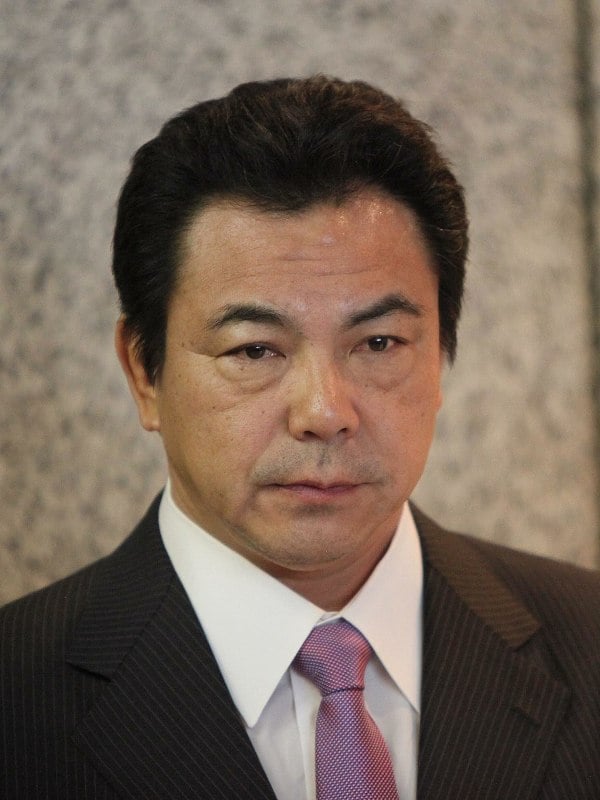
Chiyonofuji Mitsugu stands among the greatest sumo wrestlers of all time. His peers called him “The Wolf” because he combined predatory intensity with calculated technique to become one of sumo’s most dominant forces. Most champions relied on sheer mass, but Chiyonofuji redefined the sport with a completely different approach.
Known for his agility and technique
At just 183 cm (6 feet) and around 120 kg (265 lbs), Chiyonofuji was surprisingly light for a sumo wrestler. His competitors typically weighed more than 150 kg, but he turned this size difference into an advantage with his exceptional speed, muscular strength, and strategic brilliance.
His training methods really shook things up in the late 20th century! He decided to step away from the usual sumo training and brought in some bodybuilding exercises to spice up his routine. Rather than just piling on the pounds with traditional methods, he cranked out 500 push-ups every day and got busy with barbells. This fun approach helped him develop explosive power and agility that left bigger opponents in the dust!
Chiyonofuji’s peak performance with age was remarkable; he won 31 tournament championships, with 19 victories after turning 30. His record at Kyushu tournaments was exceptional—nine titles, more than any other location.
Death grip and dramatic throws
The heart of Chiyonofuji’s fighting style was his migi-yotsu grip (right hand inside, left hand outside) on his opponent’s mawashi belt. His left-hand outer grip was so powerful that people called it his “death grip”. This technique let him execute his signature move: the uwatenage overarm throw.
By mastering 41 kimarite (winning techniques), he became a highly unpredictable force in the ring. Yorikiri (force out) was his go-to winning move, but his spectacular throws—especially uwatenage and tsuridashi (lift out)—made crowds go wild.
His peak came with an incredible 53-match winning streak, the third-longest since 1926. The streak ended in dramatic fashion at the 1988 Kyushu tournament when Onokuni defeated him in what became the final grand sumo match of Japan’s Showa era. Fans were so shocked they threw their zabuton cushions toward the ring in protest.
Chiyonofuji changed sumo forever by showing that technique, speed, and muscle could beat sheer mass. He inspired generations of wrestlers who didn’t fit the traditional mold. His legacy continues as one of Japan’s most innovative sumo champions, proving that in a sport ruled by giants, the wolf can still lead the pack.
3. Futabayama Sadaji
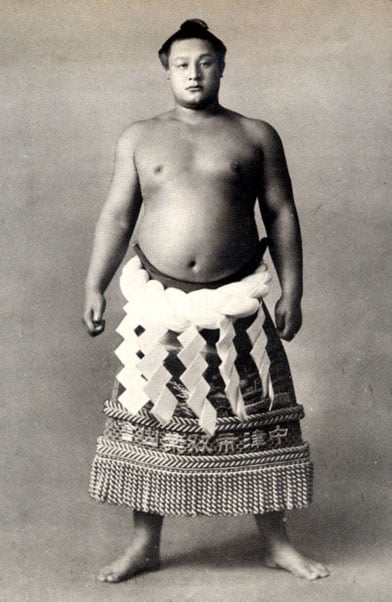
Sports records are continually established and broken; however, the accomplishments of Futabayama Sadaji during the golden age of sumo wrestling stand unparalleled. As the 35th yokozuna in history, he emerged as one of Japan’s most esteemed sumo wrestlers, distinguished by his remarkable technique, unwavering discipline, and exceptional competitive skill.
Holds the all-time record of 69 consecutive wins
Futabayama’s legacy truly shines through his amazing 69 consecutive match victories that kicked off on January 7, 1936, and lasted for three fantastic years! This incredible streak began at his sekiwake rank and continued as he climbed the ranks. He had already demonstrated his capabilities with a 27-match winning streak during his flawless 11-0 ozeki debut.
His supremacy resulted in four successive zensho-yusho (perfect tournaments) throughout this time. He did break Tanikaze’s 160-year-old record of 63 consecutive wins by reaching 66 straight victories in the May 1938 tournament!
Maegashira Akinoumi (a special wrestler from Hiroshima, who became the 37th yokozuna) finally ended the streak of Futabayama on January 3, 1939. Amoebic dysentery affected Futabayama more than his opponent’s skill that day.
Dominated the 1930s era
Futabayama ruled sumo wrestling throughout the 1930s. He claimed twelve tournament championships when only two tournaments happened each year. Modern wrestlers compete in six tournaments annually, yet his championship percentage still stands impressive.
Considered a symbol of discipline
Futabayama’s story becomes even more inspiring when you learn he was blind in one eye due to a childhood injury—something he only shared after retiring. Still, he pushed himself, trained steadily, and kept improving—making his success even more amazing.
4. Mainoumi Shuhei

Mainoumi is known as one of the most famous sumo wrestlers in Japan, in a sport that is largely ruled by giants. His fame comes not from his size but despite it. At just 5 feet 7.5 inches tall and 215 pounds, he proved that conventional wisdom about successful sumo wrestlers was wrong.
Overcame height restrictions with creativity
The original obstacle in Mainoumi’s path to professional sumo was failing the Japan Sumo Association’s physical entrance exam. He didn’t meet their strict height requirement of 173 cm (approximately 5’8″). Rather than give up, he found an unusual solution. He convinced a doctor to inject silicone into his scalp to gain the extra centimeters needed to qualify.
The procedure was painful. Doctors cut open his scalp and injected silicone above the skull through multiple treatments over a month. Mainoumi explained his determination: “I was angry at the JSA for imposing that 173-centimeter height requirement. It’s just completely arbitrary. I wanted to show them that even somebody under 170 centimeters tall could definitely win”.
Famous for fighting larger opponents
Mainoumi quickly became popular in professional ranks for his technical brilliance against much heavier opponents. People called him “Waza no Depaato” – the Department Store of Techniques. He mastered 33 different kimarite (winning techniques).
His reputation as a “giant killer” grew as he defeated some of sumo’s most imposing figures:
Akebono, who stood 6’8″ and weighed over 500 pounds
Konishiki, the 633-pound “Meat Bomb” (against whom he kept a positive 7-5 record)
Multiple other wrestlers weighing 400+ pounds
His greatest victory came in November 1991 against Akebono. He used mitokorozeme (triple-attack force out), a technique unseen in major tournaments for twenty years. This move combined tripping one leg, grabbing the other, and pushing with his head into the opponent’s chest.
He used creative tactics like nekodamashi (“deceiving the cat”) by clapping his hands in front of an opponent’s face to distract them. He also created the hassōtobi (“eight-boat leap”) – a sidestep jump at the tachi-ai (initial charge) that let him slip behind opponents.
5. Mitoizumi Masayuki
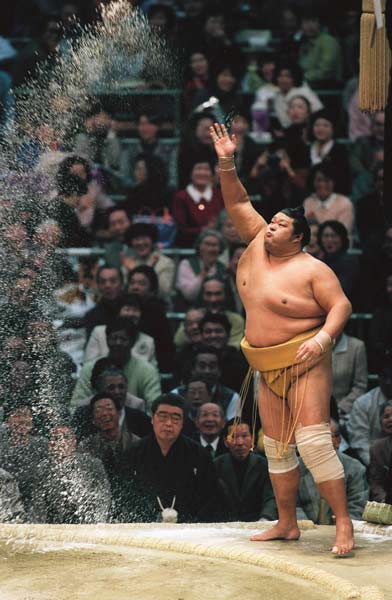
Many renowned sumo wrestlers have secured their spots in history by winning tournaments. Mitoizumi, on the other hand, won the affection of fans globally with his dramatic pre-match routine. This unique style earned him the nickname “The Salt Shaker.”
Known for his exaggerated salt-throwing ritual
Sumo wrestlers have a habit of throwing salt into the ring (dohyo) before a match. This Shinto ritual aims to clean the space and scare away bad spirits. Mitoizumi changed this old custom into something people couldn’t forget. His plan was smart—he would use a tiny bit of salt for his first throws and flip it aside without much fuss. This planned holding back set up what was to come.
Mitoizumi’s last throw became famous. He would empty the whole saltbox—about four pounds of salt—into his hand and throw it up high with a big underhand toss. The salt would go up as high as ten meters making a cloud that often reached people sitting five rows back.
The wrestler changed his salt-throwing method over time. At first, he tossed the salt forward. But he switched things up after getting salt on people near the ring. His new approach sent the salt straight up to make sure it “falls nicely” inside the dohyo.
The Japan Sumo Association started to worry about how much salt he used. They asked him to use less salt because it made the ring too slippery. This could put other wrestlers at risk.
6. Takamisakari Seiken
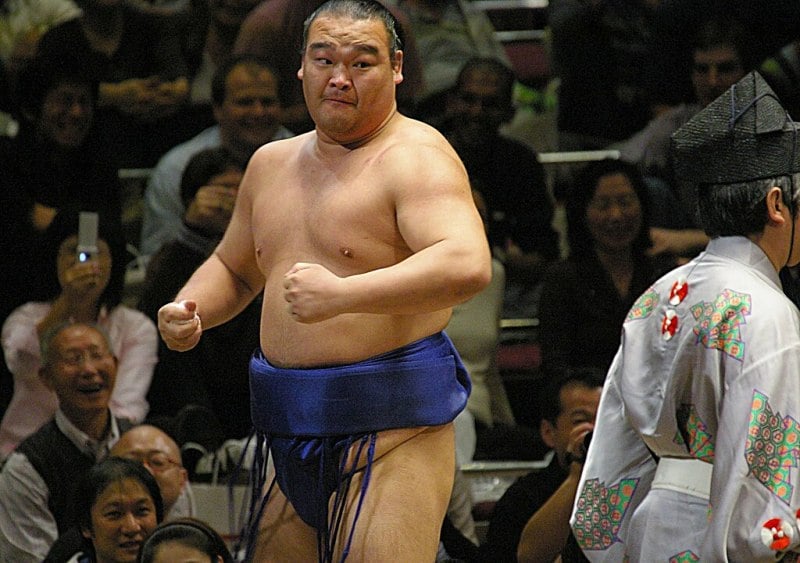
Stoicism dominates the world of sumo, but Takamisakari Seiken became a rare figure who won over Japanese audiences by showing his emotions. This ex-komusubi wrestler named Seiken Katō and born in 1976, did not rise to fame by collecting titles. Instead, his memorable character brought a fresh and unique vibrancy to this traditional sport.
Called ‘Mr. Roboto’
Takamisakari’s stiff, robot-like movements before matches earned him some memorable nicknames. His senior, former yokozuna Akebono, even dubbed him “RoboCop” because of his machine-like behavior on the dohyo.
Fans also nicknamed him “Mr. Roboto” in addition to “RoboCop.” The names suited him perfectly, thanks to his quirky, mechanical movements that stood out from the calm, steady style of most other wrestlers.
Eccentric warm-up routines
Takamisakari’s pre-bout ritual made him truly special. Spectators loved watching his dramatic face slaps, strange arm gestures, fearful grimaces, and mincing steps before matches. He’d beat his chest, flex his muscles, and slap his body with dramatic energy. These weren’t performances for attention—they were simply Takamisakari being himself, a natural reflection of the Aomori native’s personality.
Takamisakari substantiated his theatrical persona with genuine sumo skill. He secured two gold stars by triumphing over yokozuna and garnered five special prizes for his tournament accomplishments. This clearly demonstrates that, beyond mere entertainment, he was a committed athlete who contributed both skill and joy to Japan’s national sport.
7. Yamamotoyama Ryuta
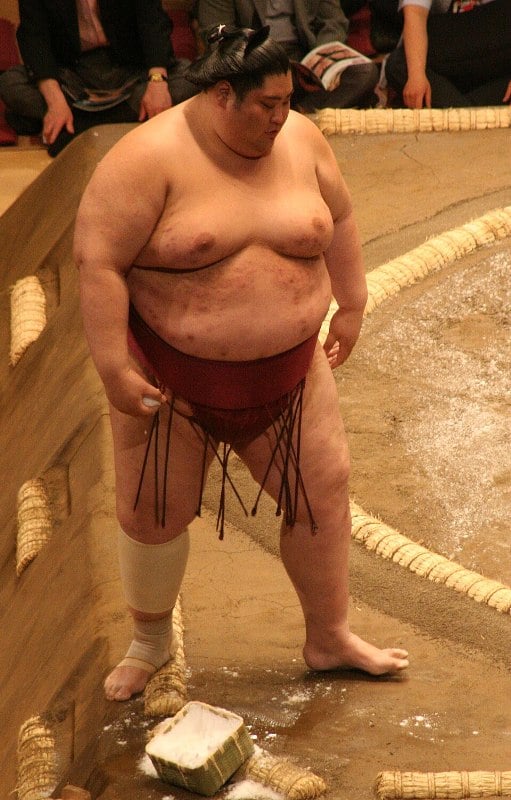
The sumo world has seen many memorable wrestlers, but Yamamotoyama was different, who left a big impact through his physical presence and controversial career. This Japanese sumo athlete shattered records and expectations during his short but headline-making journey after his birth in 1984.
At 6’4″ (192 cm) tall and a staggering 265 kg (584 pounds) at his peak, Yamamotoyama became the heaviest Japanese-born sumo wrestler ever recorded. His size was so extraordinary that he needed two standard yukata robes stitched together to fit his massive frame.
His ascent through the professional ranks occurred at a rapid pace. He climbed to the second-highest juryo division in two years – an impressive achievement in sumo’s slow advancement system. His rare mix of bulk and nimbleness made him popular with fans and hard to defeat.
His promising career ended in 2011 during one of sumo’s darkest times. The scandal emerged when officials discovered odd text messages on his phone. He later owned up to fixing matches and placing illegal bets on bouts. The Japan Sumo Association made him retire at 26 cutting off what might have become a storied career.