
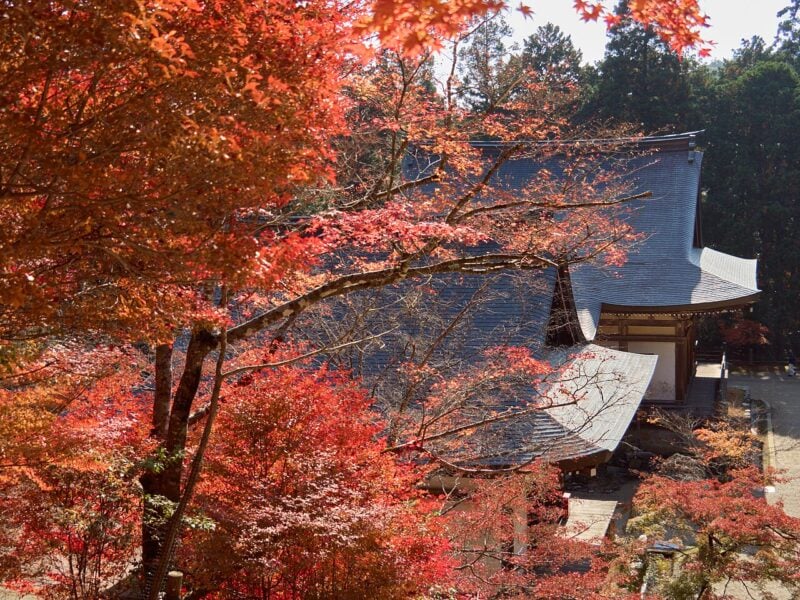
Autumn in Kyoto is one of Japan’s most beautiful seasonal experiences. Temple gardens glow with red maple leaves, mountains turn shades of orange and gold, and fallen leaves cover old stone paths. It is also one of the busiest times to visit the city.
Fortunately, you do not have to spend every day in central Kyoto. Some of the best autumn foliage can be found in the surrounding mountains, temple towns and neighboring prefectures. From the deer-filled grounds of Nara Park to the forested slopes of Mount Hiei, these day trips from Kyoto offer a welcome change of scenery.
The best time to see autumn leaves in Kyoto is usually from mid-November to early December. However, the timing of the autumn colors depends on elevation and weather conditions. Mountain destinations such as Mount Hiei, Kurama and Takao often begin changing in late October or early November, while Arashiyama and central Kyoto tend to reach peak color later.
This guide covers eight of the best day trips from Kyoto in autumn, including the top foliage spots, cultural attractions, transport information and practical travel tips. I hope my ideas here would help you to decide where to explore in Kyoto in autumn.
1. Arashiyama
.jpg "8 Best Day Trips from Kyoto in Autumn 2")
Arashiyama may be within Kyoto City, but it feels far removed from the busy streets around Kyoto Station and Gion. Its river, forested mountains, historic temples and traditional neighborhoods make it one of the most rewarding places to spend a full day during Kyoto autumn.
The classic view is from Togetsukyo Bridge, where the wooded hills create a colorful backdrop behind the Katsura River. Visit early in the morning to enjoy the scenery before tour groups arrive.

Tenryu-ji is another essential stop. This important Zen temple has a garden designed around a pond, with the Arashiyama mountains appearing to form part of the landscape. In autumn, red and orange leaves frame the pond and temple buildings beautifully.
For more fall colors, walk north towards Jojakko-ji. The hillside grounds are filled with maple trees, moss-covered stone lanterns and quiet pathways. Nearby Nison-in is known for its wide approach lined with maples, while Gio-ji offers a smaller and more intimate garden where fallen leaves rest on brilliant green moss.

The famous Arashiyama Bamboo Grove is worth seeing, but it should not be the only focus of your visit. It is the combination of temples, mountain scenery and riverside walking that makes Arashiyama special in autumn.
Best autumn foliage spots: Togetsukyo Bridge, Tenryu-ji, Jojakko-ji, Nison-in and Gio-ji.
Access from Kyoto: Take the JR Sagano Line from Kyoto Station to Saga-Arashiyama Station. The journey takes about 15 minutes, followed by a short walk to central Arashiyama. The JR route is generally faster than traveling by bus. For more information, read this page: Kyoto access information.
Travel tip: Arrive before 8:00 a.m. and explore the bamboo grove first. Continue to the northern temples as the main shopping streets become busier.
2. Nara

Nara is one of the most popular day trips from Kyoto at any time of year, but autumn gives the ancient capital an extra layer of beauty. Historic temples, traditional gardens and hundreds of free-roaming deer are surrounded by seasonal color.
Begin your journey at Nara Park, where maple, cherry and ginkgo trees turn red, orange and yellow. The broad lawns make it easy to enjoy the scenery, although you should keep maps, tickets and food away from curious deer.
Walk through the park to Todai-ji, home to one of Japan’s largest bronze Buddha statues. The approach to the temple is especially attractive when the trees change color. From there, continue towards Kasuga Taisha. Its forested paths, stone lanterns and vermilion buildings create a wonderfully atmospheric autumn walk.

.jpg "8 Best Day Trips from Kyoto in Autumn 7")
Isuien Garden is another highlight. Its carefully arranged ponds, tea houses and borrowed views of nearby hills make it one of Nara’s finest landscaped gardens. Yoshikien Garden, located next door, is also known for its moss and autumn leaves.
If you have more time, walk up Mount Wakakusa. The lower slopes provide open views across Nara, while the surrounding trees add seasonal colour.
Best autumn foliage spots: Nara Park, Todai-ji, Kasuga Taisha, Isuien Garden and Yoshikien Garden.
Access from Kyoto: Take a Kintetsu limited express or express train from Kyoto Station to Kintetsu Nara Station. Alternatively, use the JR Nara Line to JR Nara Station. Kintetsu Nara Station is closer to Nara Park.
Travel tip: Start early and visit Isuien before exploring the busiest section of Nara Park. Comfortable shoes are essential because the main attractions are spread across a large area.
3. Osaka City

Osaka is better known for food, nightlife and modern entertainment than autumn leaves. However, it makes an interesting day trip if you want to combine seasonal scenery with a completely different side of the Kansai region.
Osaka Castle Park is the most convenient place to enjoy autumn foliage in the city. Ginkgo trees turn bright yellow, while cherry trees and other deciduous trees add red and orange shades around the castle grounds. The contrast between the white-and-green castle tower and the autumn colors is particularly photogenic.
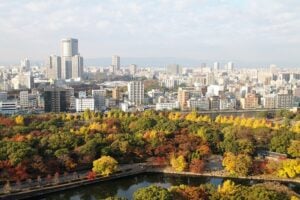
Another seasonal highlight is Midosuji Avenue. Hundreds of ginkgo trees line this major boulevard through central Osaka, creating long stretches of golden foliage. You can walk sections of the avenue around Hommachi, Shinsaibashi and Namba before exploring the nearby shopping arcades.
For a quieter experience, visit the traditional Japanese garden in Expo ’70 Commemorative Park, north of central Osaka. The landscaped grounds include ponds, streams and wooded areas that are especially attractive in November.

End the day in Dotonbori or Shinsekai and try Osaka specialities such as takoyaki, okonomiyaki or kushikatsu.
Best autumn foliage spots: Osaka Castle Park, Midosuji Avenue and Expo ’70 Commemorative Park.
Access from Kyoto: JR Special Rapid trains connect Kyoto Station with Osaka Station in about 30 minutes. Hankyu trains are useful if travelling from central Kyoto to Osaka-Umeda.
Travel tip: Osaka is best for travellers who want urban sightseeing and food alongside autumn colour. Choose Nara, Takao or Mount Hiei if foliage is your main priority.
4. Kurama and Kibune
.jpg "8 Best Day Trips from Kyoto in Autumn 11")
Kurama and Kibune are two mountain villages north of Kyoto. Together, they offer one of the best day trips from Kyoto in autumn for travelers who enjoy hiking, temples and quiet forest scenery.
Kurama-dera is built on the wooded slopes of Mount Kurama. The temple is associated with spiritual practice, mountain legends and the warrior monk Minamoto no Yoshitsune. Reaching its main hall involves a steady uphill walk, although a short cable railway covers part of the climb.
Behind the main hall, a forest trail crosses the mountain to Kibune. The route passes tall cedar trees, exposed roots and smaller religious sites. Autumn colors appear between the evergreens, making the walk especially atmospheric.
Kibune is centred around Kifune Shrine, an ancient shrine associated with water. Its lantern-lined stone staircase is one of the most recognizable sights in northern Kyoto. The surrounding maples usually change earlier than trees in central Kyoto.
The complete hike between Kurama and Kibune takes around one hour, excluding visits to the temple and shrine, and it is steep in places. Wear proper walking shoes and avoid the trail during heavy rain. Kurama hiking information
Best autumn foliage spots: Kurama-dera, the Mount Kurama forest trail, Kifune Shrine and the Eizan Railway route.
Access from Kyoto: Travel to Demachiyanagi Station and take the Eizan Kurama Line. Get off at Kurama for the temple or Kibuneguchi for Kibune. A local bus connects Kibuneguchi Station with the village.
Travel tip: Walk from Kurama to Kibune rather than the opposite direction if you prefer to finish near restaurants and the shrine. Check trail conditions before departure.
5. Ohara
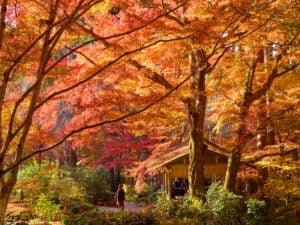
Ohara is a peaceful rural community in the mountains north of Kyoto. Its small temples, farmland and misty hills make it feel much farther from the city than it actually is.
Sanzen-in is the main attraction. This temple has deep connections to Japan’s imperial family and is famous for its moss garden, miniature stone figures and maple trees. During autumn, red leaves stand out against the vivid green moss, creating one of the most memorable scenes in northern Kyoto.

Continue to Hosen-in, where visitors can view its garden from inside a tatami room. The garden appears almost like a framed painting, especially when the surrounding leaves change color. Nearby Shorin-in and Jikko-in can be added without rushing.
On the opposite side of the village, Jakko-in is reached along a quiet road past fields, houses and small shops. The temple has a connection to The Tale of the Heike and offers a more reflective atmosphere than the busy approach to Sanzen-in.
Best autumn foliage spots: Sanzen-in, Hosen-in, Jikko-in and Jakko-in.
Access from Kyoto: Kyoto Bus No. 17 runs from Kyoto Station to Ohara. The journey normally takes around 40–60 minutes, depending on traffic. Japan National Tourism Organization’s Ohara guide
Travel tip: Buses can become crowded during peak foliage season. Leave early, avoid relying on the last return service and check the current timetable before traveling.
6. Ishiyama-dera
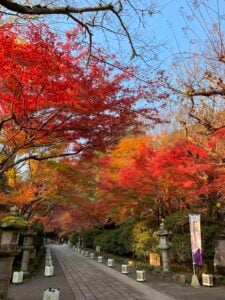
Located in Otsu, Shiga Prefecture, Ishiyama-dera is an easy but often overlooked autumn day trip from Kyoto. The temple stands near the Seta River and takes its name from the unusual wollastonite rock formations found throughout its grounds.
Ishiyama-dera is traditionally associated with Murasaki Shikibu, who is said to have found inspiration here while writing The Tale of Genji. This literary connection, combined with its historic buildings and natural setting, gives the temple significance beyond its autumn scenery.
In November, maple trees surround the stone steps, main hall and pagoda. The combination of red leaves, dark timber buildings and pale rock formations is quite different from the garden landscapes found in central Kyoto.
Allow enough time to climb through the upper temple grounds. Selected autumn evening illuminations may also be held, but dates and admission arrangements change each year.
Best autumn foliage spots: The approach to the main hall, the wollastonite rock formations and the area around the Tahoto Pagoda.
Access from Kyoto: Take a JR train from Kyoto Station to Ishiyama Station. Transfer to the Keihan Ishiyama-Sakamoto Line and get off at Ishiyamadera Station, then walk for about 10 minutes. Official regional access guide
Travel tip: Combine the temple with a riverside walk, or add another Otsu attraction if you want to make this a longer day trip.
7. Mount Hiei and Enryaku-ji

Mount Hiei rises between Kyoto and Lake Biwa. Its higher elevation means the leaves usually change earlier than they do in central Kyoto, making it a useful choice for travelers visiting in late October or early November.
The mountain is home to Enryaku-ji, the headquarters of the Tendai school of Japanese Buddhism and part of the UNESCO-listed Historic Monuments of Ancient Kyoto. Founded in the eighth century, it became one of the country’s most influential Buddhist centres.

Enryaku-ji is not a single building but a large complex divided into the Todo, Saito and Yokawa areas. Todo contains the most important buildings, while Saito feels quieter and more wooded. Travelling between all three areas requires time, so first-time visitors may prefer to concentrate on Todo and Saito.
Autumn leaves surround temple paths, stone monuments and viewpoints over Lake Biwa. The mountain air can be considerably cooler than Kyoto, particularly in the morning.
Best autumn foliage spots: The Todo and Saito precincts of Enryaku-ji, mountain paths and Lake Biwa viewpoints.
Access from Kyoto: One scenic route runs from Demachiyanagi via the Eizan Railway, Eizan Cable and ropeway, followed by a mountain bus. Seasonal direct buses may operate from central Kyoto. Services can be reduced outside the main travel period.
Travel tip: Check cable car, ropeway and bus schedules carefully. Bring an extra layer, as temperatures on Mount Hiei can be several degrees lower than in Kyoto City.
8. Takao

Takao is one of Kyoto’s classic autumn destinations. Located in a forested valley northwest of the city, it is known for three historic temples: Jingo-ji, Saimyo-ji and Kozan-ji.
Jingo-ji provides the most dramatic autumn scenery. A long stone staircase leads through thick maple forest to the temple grounds. The climb requires some effort, but the views, old buildings and fiery foliage make it worthwhile.
Saimyo-ji is smaller and quieter, with an attractive approach across a red bridge. Kozan-ji is historically significant for the Choju-giga scrolls, often described as early examples of Japanese narrative art. It is also included among Kyoto’s UNESCO World Heritage properties.
A walking route links the three temples through the valley. Takao’s foliage generally appears earlier than central Kyoto’s because of its cooler mountain setting.
Best autumn foliage spots: Jingo-ji’s stone staircase, Saimyo-ji’s bridge, Kozan-ji and the Kiyotaki River valley.
Access from Kyoto: JR buses travel from Kyoto Station to the Takao area. Journey times vary with traffic, and autumn congestion can cause delays.
Travel tip: Wear shoes suitable for stairs and uneven paths. Begin with Jingo-ji in the morning, then continue to Saimyo-ji and Kozan-ji.
Tips for Planning Kyoto Autumn Day Trips

Autumn is a popular season, so a little preparation can make a major difference.
- Visit mountain areas early in the season and lower destinations later.
- Check the Kyoto Autumn Leaves Calendar for current color reports.
- Leave before the morning rush, particularly for Arashiyama, Nara and Ohara.
- Check official transport schedules, admission fees and illumination dates before traveling.
- Carry some cash because smaller temples and rural buses may not accept cards.
- Wear comfortable closed-toe shoes suitable for stone steps and forest trails.
- Avoid trying to include too many attractions. Three or four well-chosen stops usually create a better day than a rushed checklist.
Are you coming to Kyoto this autumn?
In Kyoto city, there are many places to visit and enjoy the fall colors. You need at least one week to explore some of those and the above mentioned Kyoto day trips.
The best day trips from Kyoto in autumn reveal how varied the region can be. Arashiyama delivers famous river and mountain views, Nara combines cultural landmarks with deer and parkland, and Osaka adds food and city life. Kurama, Kibune, Ohara, Mount Hiei and Takao offer cooler mountain scenery, while Ishiyama-dera provides history and autumn colors away from Kyoto’s busiest districts.
If your trip falls in early November, focus on higher places such as Mount Hiei, Takao or Kurama. For late November and early December, Arashiyama, Nara and Ishiyama-dera are usually stronger choices.
Keep at least one day flexible, follow local foliage updates and let the changing leaves decide where you travel next. Have a wonderful trip to Japan this autumn guys.