
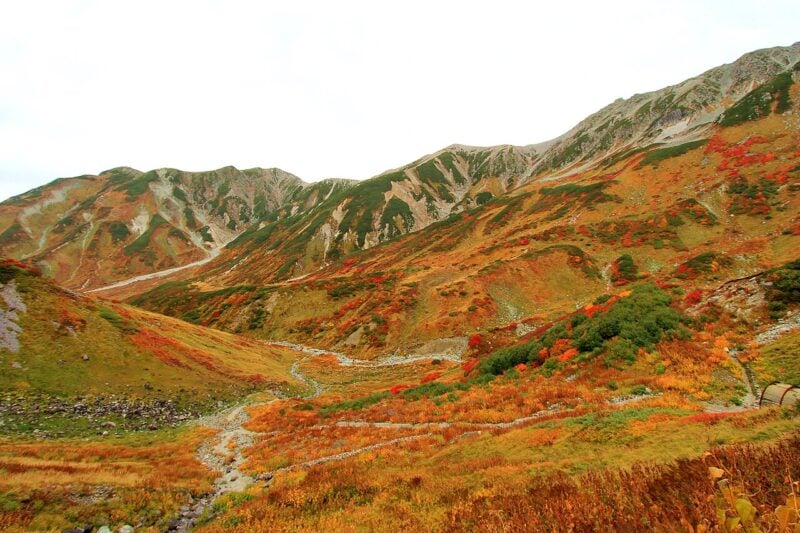
Autumn in Japan does not begin everywhere at once. While Tokyo, Kyoto and Osaka often remain green until November, the first autumn colors appear much earlier in the mountains of Hokkaido and northern Honshu.
By traveling north or heading to higher elevations, you can see red rowan leaves, golden birch forests and orange alpine shrubs from early September. This makes September and early October an excellent time for travelers who want to enjoy Japan’s autumn scenery before the busiest foliage season begins.
Here are ten of the best places to see early autumn colors in Japan.
1. Mount Asahidake, Hokkaido
Typical viewing period: Early to late September
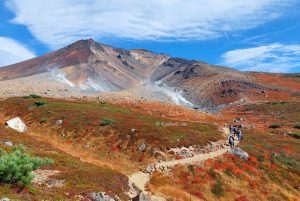
At 2,291 meters, Mount Asahidake is the highest mountain in Hokkaido and one of the first places in Japan to welcome autumn. The foliage usually begins changing near the summit in early September before gradually moving towards lower elevations.
The Asahidake Ropeway makes the mountain accessible even if you are not planning a serious hike. From Sugatami Station, an easy walking trail passes volcanic ponds, steaming vents and slopes covered with red, orange and yellow alpine plants.
Conditions change quickly at this elevation, so bring warm clothing even when the weather feels summery in nearby Asahikawa. Daisetsuzan’s autumn colours often peak around mid-September.
Access: Take the Ideyu-go bus from JR Asahikawa Station to Asahidake Onsen, the final stop. The journey takes approximately 90 minutes. The same bus stops at Asahikawa Airport, from where the trip takes about 60 minutes. The ropeway station is a short walk from the bus stop. See the Asahidake Visitor Center access guide.
Travel tip: Buses are limited, so check the return timetable before boarding the ropeway. Begin early, as clouds often develop around the summit later in the day. Temperatures near Sugatami Station can be considerably lower than in Asahikawa, so bring a warm, wind-resistant jacket.
2. Ginsendai, Hokkaido

Typical viewing period: Mid to late September
Ginsendai is another spectacular autumn destination within Daisetsuzan National Park. Located at approximately 1,490 meters, it serves as the starting point for the trail up Mount Akadake.
During the second half of September, the mountainside becomes a colorful patchwork of crimson nanakamado, golden birch and dark-green conifers. You do not have to reach the summit to appreciate the scenery, although walking beyond the trailhead provides increasingly impressive views.
Traffic restrictions are often introduced during the busiest foliage period, with visitors required to use temporary shuttle buses. Check local transport information before setting out. Hokkaido’s official tourism site describes Ginsendai as one of the island’s earliest autumn foliage destinations.
Access: Ginsendai is reached by a narrow, partly unpaved mountain road branching from National Route 273 near Lake Taisetsu. Seasonal buses may operate from Sounkyo. Private vehicles are normally restricted during the peak foliage period, when visitors must use designated buses or other authorised transport.
Travel tip: Check that year’s access arrangements before visiting because road-control dates and bus reservations can change. There are few facilities at the trailhead, so carry water, food and suitable hiking equipment. The road usually becomes inaccessible once the winter closure begins. Hokkaido’s official tourism guide publishes local access notices.
3. Mount Kurodake and Sounkyo, Hokkaido

Typical viewing period: Mid-September to mid-October
Mount Kurodake offers one of the easiest ways to experience the early autumn colors of Daisetsuzan. The Kurodake Ropeway travels from Sounkyo Onsen to the mountain’s fifth station, where visitors can admire sweeping views without completing a long climb.
Color first appears around the upper mountain in September and then moves down towards Sounkyo Gorge. This creates a relatively long viewing season. By early to mid-October, the forests surrounding the hot-spring town often display their best shades.
Stay overnight in Sounkyo if you would like to combine autumn leaf viewing with an outdoor onsen bath.
Access: From JR Kamikawa Station, take a Dohoku Bus to Sounkyo. The journey generally takes around 30 minutes, followed by a five-minute walk to the Kurodake Ropeway. Direct buses may also operate from Asahikawa. By car, Sounkyo is approximately 90 minutes from Asahikawa Station.
Travel tip: The ropeway reaches the fifth station, but an additional chairlift is needed to travel higher. Walking to the summit requires proper hiking gear. Ropeway and lift services may be suspended because of strong winds or maintenance, so check the operating information before departure.
4. Shiretoko National Park, Hokkaido

Typical viewing period: Late September to mid-October
The remote Shiretoko Peninsula offers a wilder autumn experience. Dense forests, volcanic mountains and clear lakes turn rich shades of yellow, orange and red, while evergreen trees add contrast to the landscape.
The Shiretoko Five Lakes are particularly beautiful during autumn. Elevated boardwalks provide mountain views and make part of the area accessible without a demanding hike. The scenic Shiretoko Pass is another rewarding option when the road and weather conditions allow.
Wildlife is one of Shiretoko’s greatest attractions, but visitors should remember that this is brown bear territory. Follow local safety advice and never approach or feed animals.
Access: Shiretoko Five Lakes is about 14 kilometres from Utoro, taking approximately 20 minutes by car. Seasonal buses connect Utoro with the lakes, while limited services also run from JR Shiretoko-Shari Station. Memanbetsu Airport is roughly two hours away by road. See the official Shiretoko Five Lakes access page.
Travel tip: Public transport is infrequent, making an overnight stay in Utoro more practical than a rushed day trip. Access to the ground trails may be controlled according to bear activity and season, although the elevated boardwalk is generally the easiest option. Follow staff instructions and never carry exposed food on nature trails.
4. Lake Akan, Hokkaido
Typical viewing period: Late September to mid-October
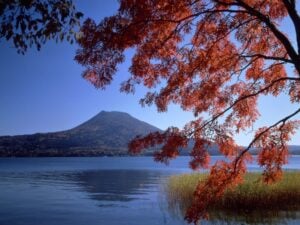
Lake Akan is a peaceful choice for travelers who want autumn scenery without climbing a mountain. Forests surround the volcanic lake, producing lovely reflections when the leaves begin changing.
Walking trails around Akanko Onsen provide easy access to the landscape. You can also take a sightseeing cruise, visit the bubbling Bokke mud pools or learn about Ainu culture at Lake Akan Ainu Kotan.
For a longer road trip, combine Lake Akan with Lake Mashu and Lake Onneto. The latter is especially photogenic when its blue-green water is framed by colorful trees.
Access: Kushiro Airport is the most convenient gateway. Direct buses connect the airport with Akanko Onsen in approximately one hour. Travellers arriving by train can take an Akan Bus from JR Kushiro Station, although services are limited. A rental car is useful for combining Lake Akan with Lake Mashu and Lake Onneto. Current options are listed on the Lake Akan access guide.
Travel tip: Stay in Akanko Onsen if you plan to join an early cruise or explore the lakeside before day visitors arrive. Lake Onneto has limited public transport, so it is considerably easier to visit by car. Fog can obscure lake views in the morning, especially after damp weather.
6. Jozankei Onsen, Hokkaido

Typical viewing period: Late September to mid-October
Located about an hour from central Sapporo, Jozankei is one of the most convenient places to see early autumn foliage in Japan.
Forest-covered hills surround the hot-spring town, while the Toyohira River runs through the valley. The view from Futami Suspension Bridge is particularly attractive when the trees turn red and gold. Visitors can also enjoy seasonal scenery from walking paths, sightseeing buses and canoe tours.
According to Hokkaido’s official tourism guide, colors are generally visible from late September to mid-October.
Access: The reservation-only Kappa Liner travels directly from Sapporo Station to Jozankei Onsen in approximately one hour. Regular Jotetsu buses also serve the town but stop more frequently. Get off near Jozankei Yunomachi for the central onsen area and Futami Suspension Bridge. See the official Jozankei transport information.
Travel tip: Reserve the Kappa Liner early during the autumn foliage season. Jozankei can be visited as a day trip, but staying overnight lets you enjoy an onsen and explore before the midday crowds arrive. Wear comfortable shoes, as the main viewpoints are spread around the valley.
7. Hakkoda Mountains, Aomori
Typical viewing period: Late September to mid-October
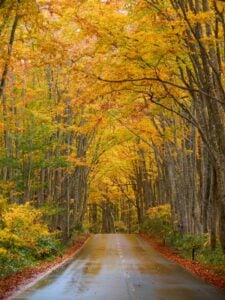
The Hakkoda Mountains are among the earliest places on Honshu to display autumn foliage. The Hakkoda Ropeway carries passengers above forests and wetlands to the upper slopes of Mount Tamoyachi.
From the summit station, you can follow a relatively gentle walking course through the marshland. The mixture of colorful grasses, mountain ash and broadleaf forest creates a landscape that feels different from Japan’s better-known maple-viewing spots.
Weather in the mountains can change suddenly, so check the ropeway’s operating status before visiting.
Access: Take a JR bus from JR Aomori or Shin-Aomori Station to Hakkoda Ropeway Station. The journey takes approximately 60 minutes under normal conditions. Visitors traveling by car can reach the ropeway in around 50 minutes from central Aomori, and free parking is available. Check the official Aomori tourism information.
Travel tip: Check both the bus timetable and ropeway status before leaving Aomori. Strong winds can suspend ropeway operations with little warning. Arrive early during peak foliage weeks and allow enough time to catch the final return bus.
8. Hachimantai, Iwate and Akita
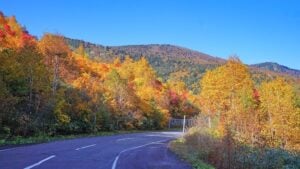
Typical viewing period: Late September to mid-October
Hachimantai is a volcanic plateau stretching across Iwate and Akita prefectures. Its high elevation brings autumn to the area earlier than many other parts of Tohoku.
The Hachimantai Aspite Line offers impressive views of colorful mountain slopes, while walking trails lead past ponds, wetlands and alpine vegetation. Matsukawa Gorge and Goshogake Onsen are also worth visiting as the colors move towards lower elevations.
A rental car provides the most flexibility, particularly if you want to explore the hot springs and smaller viewpoints scattered around the region.
Access: From JR Morioka Station, take a bus from the east exit towards Hachimantai and get off at Hachimantai Summit or the stop closest to your chosen trail. The trip takes approximately 90–110 minutes. From the Akita side, buses run from JR Tazawako Station, although the journey is longer. JNTO provides an overview of both approaches.
Travel tip: Bus services are seasonal and relatively limited. A rental car provides easier access to the Aspite Line, Goshogake Onsen and smaller viewpoints. Fuel up before entering remote mountain roads, and check for closures if cold weather or early snowfall is forecast.
9. Tateyama Kurobe Alpine Route, Toyama and Nagano
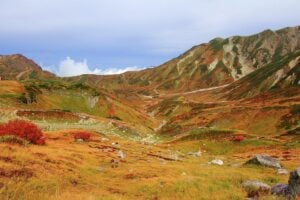
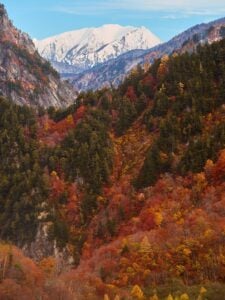
Typical viewing period: Mid-September to late October
The Tateyama Kurobe Alpine Route is one of the best autumn journeys in the Japanese Alps. Because the route crosses several elevations, the foliage season progresses gradually down the mountains.
Colors may begin around Murodo, the route’s highest point, in mid-September. They then move towards Daikanbo, Kurobedaira and lower sections throughout October. Visitors travel using cable cars, buses and ropeways, making the scenery accessible without a long mountain hike.
The upper areas can be surprisingly cold. Pack layers, gloves and suitable shoes. JNTO notes that the changing leaves begin at higher elevations before moving down the route.
Access: The route has two entrances: Tateyama Station in Toyama Prefecture and Ogizawa in Nagano Prefecture. From Toyama, take the Toyama Chiho Railway to Tateyama Station. From Nagano Station, take an express bus to Ogizawa. Private vehicles cannot travel through the Alpine Route, so visitors continue by cable car, bus and ropeway. See the official access guide.
Travel tip: Reserve tickets in advance during the autumn season. If crossing the entire route, arrange baggage forwarding rather than carrying a large suitcase between vehicles. Travellers short on time can enter and leave from the same side, but they should decide which viewpoints they most want to see.
10. Senjojiki Cirque, Nagano
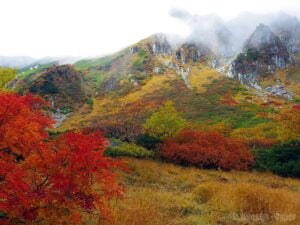
Typical viewing period: Mid-September to early October
Senjojiki Cirque lies high in the Central Alps and can be reached by the Komagatake Ropeway. At 2,612 meters, the upper station offers dramatic views of steep mountain walls shaped by ancient glacial activity.
Autumn arrives early here, coloring the low shrubs and mountain vegetation in red, orange and gold. A short walking trail allows casual visitors to explore the cirque, while experienced hikers can continue towards the surrounding peaks.
The combination of high mountains and easy ropeway access makes Senjojiki an excellent option for an early autumn trip from Tokyo or Nagoya. Autumn vegetation is generally visible from mid-September through early October.
Access: From JR Komagane Station, take the local bus to Shirabidaira Ropeway Station; the combined journey to the ropeway takes approximately 45–50 minutes. The Komagatake Ropeway then reaches Senjojiki Station at 2,612 meters. Drivers must park near Suganodai Bus Center and continue by bus because private cars cannot reach Shirabidaira. Read the JNTO Senjojiki guide.
Travel tip: Visit early because queues for buses and ropeway cabins can become long during peak autumn weekends. The short trail around the cirque is manageable for most visitors, but routes beyond it enter serious mountain terrain. Bring warm layers, rain protection and shoes suitable for uneven ground.
Tips for Planning an Early Autumn Trip
Autumn foliage dates vary each year depending on temperature, rainfall and elevation. Check Japan’s latest foliage forecast, local transport schedules and ropeway operating information shortly before traveling.
Mountain weather is also much colder than conditions in nearby cities. Carry a warm jacket, wear shoes with good grip and avoid hiking during severe weather.
If you travel in September, focus on Daisetsuzan and other high mountains in Hokkaido. For late September and early October, expand your itinerary to include Tohoku and the Japanese Alps. With careful timing, you can experience Japan’s autumn colors several weeks before they reach Tokyo and Kyoto.