
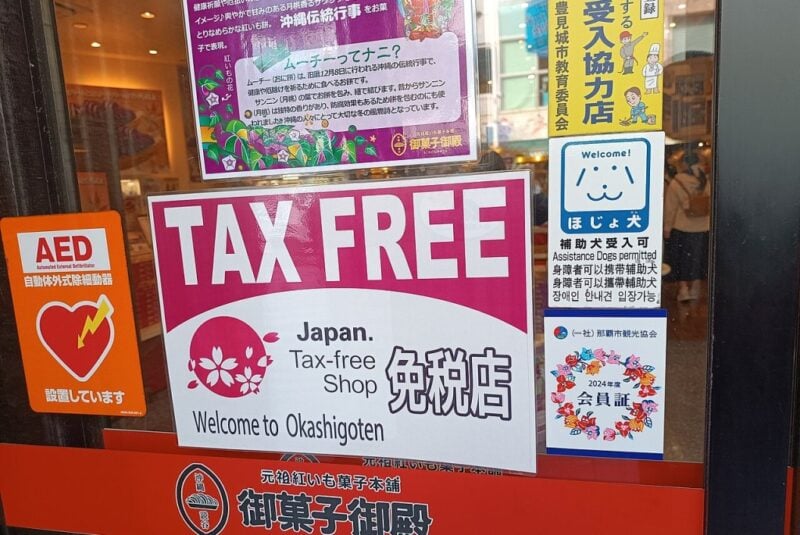
Tax-free shopping in Japan is changing. From November 1, 2026, international tourists will pay the full price, including consumption tax, when buying eligible goods. They will then receive a tax refund after completing a customs procedure before leaving Japan.
The new system will affect tourists shopping for electronics, cosmetics, clothing, food, souvenirs and other products. Although tax-free shopping will still be available, the refund process will be different. Travelers will need to keep their purchased items, complete the procedure before checking in their luggage and leave Japan within 90 days of purchase.
The good news is that tax-free shopping is not disappearing. In fact, some of the rules are becoming simpler. The less convenient part is that you will need to complete an important procedure before checking in your luggage.
This guide explains how Japan’s new tax-free shopping system works, who is eligible, what products qualify and how tourists can claim their consumption tax refund.
How Tax-Free Shopping Works in Japan Now
.jpg "Japan’s New Tax-Free Shopping System: What Tourists Need to Know 2")
Under the system in place until October 31, 2026, eligible visitors can generally receive the tax benefit while they are still at the shop.
At some stores, the tax is removed directly at the register. At large shopping centres and department stores, you may first pay the full amount and then visit a separate tax-free counter for an immediate refund. Either way, the process is usually finished before you leave the building.
Japan’s standard consumption tax is generally 10 percent. A reduced rate of 8 percent applies to certain items, including food and non-alcoholic drinks.
The current system is convenient for genuine visitors, but it has also been open to misuse. Some people have bought large quantities of tax-free goods and resold them inside Japan rather than taking them overseas. The new refund model allows customs officials to confirm that the products are actually leaving the country before the tax is returned.
What Changes on November 1, 2026?
The biggest change is simple: you pay first and receive the tax refund later.
Suppose you buy a camera with a tax-exclusive price of 100,000 yen. Under the current system, an eligible tourist may pay 100,000 yen at the tax-free counter. Under the new system, you will initially pay the tax-inclusive price of 110,000 yen.
When you leave Japan, you will scan your passport at a tax-free procedure terminal. Once customs confirms that the camera is being taken out of the country, the refund can be processed using the method arranged by the retailer or its refund service provider.
This means you need enough money or available credit to cover the full tax-inclusive price during your trip. That may not matter much when buying a few boxes of sweets, but it is worth considering if you plan to purchase an expensive watch, designer bag or new camera lens.
One point that could otherwise cause confusion: the refund does not necessarily come from a single government counter. According to the Japan Tourism Agency, each tax-free shop or the refund company working for it will handle the payment. Possible methods include a credit card refund, bank transfer, an app-based payment or cash at the departure point.
Ask how the refund works when you make the purchase. Do not assume that every shop will offer the same option, and check whether the retailer or refund provider charges a handling fee.
Who Can Shop Tax-Free in Japan?
Most international tourists entering Japan with Temporary Visitor status will qualify. In general, eligible foreign visitors must be non-residents and must have been in Japan for less than six months.
Other eligible categories include people with certain landing permissions, such as cruise ship tourists and travellers in transit. Japanese citizens who normally live overseas may also qualify, though they need documents proving that they have maintained an address or residence outside Japan for at least two years.
For an ordinary holiday, the practical advice is straightforward: bring your passport when you go shopping. A photograph or photocopy will not normally replace the original document.
If you enter through an automated immigration gate, it is also sensible to request an entry stamp before leaving the immigration area. Electronic records can be used in many situations, but some retailers may still rely on the physical stamp to confirm your status.
Tax-free shopping is only available at authorised shops. Look for the red-and-white Japan Tax-Free Shop logo near the entrance or checkout, or ask a staff member before filling your basket.
The Minimum Purchase Amount
The minimum threshold is not changing.
To qualify, you must spend at least 5,000 yen before tax at one participating shop on one calendar day. Purchases from different branches or unrelated shops cannot usually be combined simply because they belong to the same brand.
Some department stores and shopping centres operate central tax-free counters that allow purchases from participating shops within the same complex to be processed together. If you are unsure, ask before paying.
The 5,000-yen requirement is based on the tax-exclusive amount. Depending on the tax rate, the amount shown on the final receipt will be slightly higher.
General Goods and Consumables Will Be Treated the Same Way
.jpg "Japan’s New Tax-Free Shopping System: What Tourists Need to Know 3")
One of the more welcome changes is the removal of the separate categories for “general goods” and “consumables.”
General goods include items such as clothing, electronics, shoes, watches and household products. Consumables cover things that can be used up, including food, drinks, cosmetics and medicine.
Under the current rules, consumables must usually be placed in special sealed packaging. They also come with a purchase limit of 500,000 yen and must be taken out of Japan within 30 days. General goods follow a different time limit.
From November 1, 2026:
- The distinction between general goods and consumables will be removed.
- Special sealed packaging for consumables will no longer be required.
- The 500,000-yen upper limit on consumable purchases will be abolished.
- The same 90-day departure deadline will apply to all eligible products.
That should mean fewer sealed plastic bags taking up valuable suitcase space. Still, the end of special packaging does not mean you can use the products during your holiday.
If you buy tax-free chocolates, sunscreen, whisky or face cream, you must take those products out of Japan. Eating the chocolates on the Shinkansen or opening the face cream at your hotel could make the purchase ineligible for a refund.
The Receipt Rule You Really Need to Understand
This is the detail most likely to catch travellers out.
Customs will treat each purchase transaction—usually represented by one receipt—as a complete group. If a single item from that receipt is missing when you leave Japan, the entire transaction may become ineligible for a tax refund.
Imagine that you buy skincare, snacks and a bottle of sake together. You finish one bag of snacks during the trip but still have everything else. Because the missing snacks appeared on the same receipt, you may lose the refund for all the goods listed on it.
There is a simple way to avoid this: separate the things you want to use in Japan from the things you are buying tax-free.
Pay for your train snacks and immediately needed toiletries in a normal transaction. Put souvenirs and products you intend to take home on a separate tax-free receipt.
It may feel fussy at the checkout, but it is much better than losing a sizeable refund over one half-eaten box of biscuits.
What to Do at the Airport or Seaport
Under the new system, the departure procedure is no longer a formality. No customs confirmation means no refund.
The procedure will work like this:
- Go to the tax-free procedure area in the international departure lobby.
- Do this before checking in your suitcase.
- Scan your passport at the kiosk or electronic terminal.
- Wait for either a green or red result.
- If you receive a green result, the customs procedure is complete.
- If you receive a red result, take your purchases to the designated customs inspection area.
- After customs confirmation, the shop or refund provider can process your refund.
The terminal scan itself should take only a few seconds. An inspection, however, may take longer—especially during busy departure periods.
At Narita, Haneda, Kansai, Chubu, Fukuoka, New Chitose and Naha airports, travellers may also be able to complete the electronic procedure through Visit Japan Web while connected to the dedicated Wi-Fi in the international departure lobby. You must still have the goods with you in case customs asks to see them.
Complete the Procedure Before Checking Your Bags
Of all the rules in this guide, this is the one I would write at the top of my packing list:
Do not check in luggage containing tax-free purchases until you have completed the customs procedure.
The tax-free terminals and inspection areas are located before baggage check-in because customs may ask you to show the goods. Once the airline has accepted your suitcase, you generally cannot retrieve it simply to complete the tax-free process.
If your purchases include liquids, large bottles or other items that cannot travel in your cabin bag, pack them in your checked suitcase—but keep the suitcase with you until customs confirmation is complete.
Plan to arrive earlier than you usually would, particularly if you have several purchases or are travelling during a holiday period. Missing a flight because you left the procedure too late will be your responsibility, and neither the airline nor customs is required to compensate you.
What Happens If You Have a Domestic Connection?
If you fly from Sapporo to Tokyo and then continue from Tokyo to another country, complete the procedure at the airport where you actually leave Japan.
In this example, that would be Haneda or Narita not New Chitose Airport.
Make sure your baggage arrangements allow you to present the items at the international departure airport. Through-checked luggage could make this more complicated, so speak with the airline before the first flight if your tax-free goods will be packed in the hold.
Cruise passengers must complete the procedure at their final Japanese port. Special rules may apply to itineraries that leave Japan, call at an overseas port and later return, so it is worth checking the details for your particular cruise.
What Should You Keep?
Japan’s tax-free purchase information is recorded electronically, but keeping your paperwork organised remains a good idea.
Hold on to:
- Your original passport
- Tax-free purchase receipts
- Refund registration details
- Credit card slips, where relevant
- Warranties or certificates for expensive items
For an individual product costing at least one million yen before tax, customs may request a warranty or certificate of authenticity. Store those documents somewhere easy to reach rather than at the bottom of a packed suitcase.
You should also take a quick photograph of each receipt. It may not replace the original if the shop requires it, but it gives you a useful record if paperwork goes missing.
Practical Tips for a Trouble-Free Refund

First, ask about the refund method before buying anything expensive. The store should explain whether your money will return to a card, bank account or app, or whether cash collection is available when you depart.
Second, group purchases carefully. Items you plan to use in Japan should go on a normal receipt, while unopened souvenirs can be processed as tax-free goods.
Third, keep everything together. A packing cube or dedicated section of your suitcase makes inspection much easier than hunting through several bags for a lipstick, packet of tea or tiny souvenir.
Finally, leave time for the procedure. Japan’s airports are efficient, but efficiency does not make a queue disappear on a busy Sunday evening.
Is Tax-Free Shopping Still Worth It?
For a small purchase that only just reaches the 5,000-yen threshold, the saving may not be large enough to justify extra paperwork or an earlier airport arrival particularly if the refund provider deducts a service fee.
For electronics, quality kitchen knives, designer goods, watches, cosmetics or a larger souvenir haul, the savings can still be worthwhile.
The new system adds an extra step, but the basic benefit remains: eligible visitors can recover the consumption tax on goods they genuinely take home. The trick is to treat the airport procedure as part of the purchase rather than something optional to remember at the last minute.
Keep your passport handy, save your receipts, resist opening the snacks and visit customs before surrendering your suitcase. Do those four things, and Japan’s new tax-free system should be far less daunting than it first appears.
Read our guide on the “best shopping areas in Tokyo.” Let’s explore Japan and enjoy shopping there!