
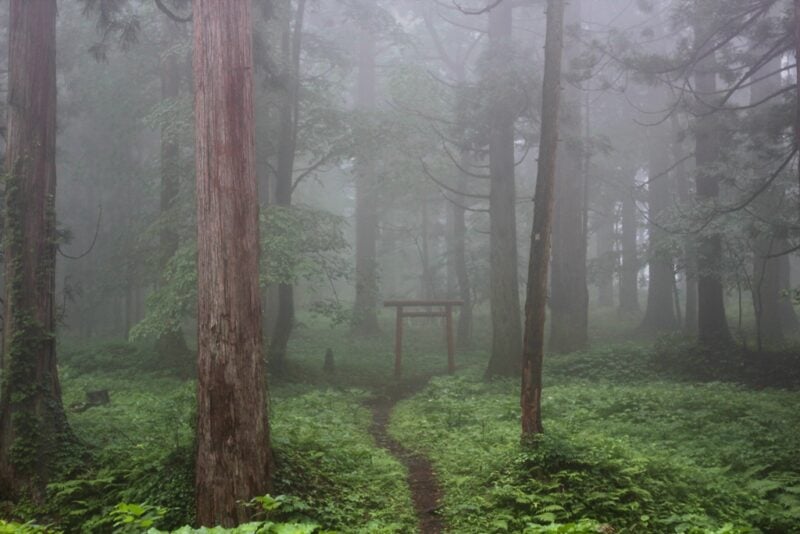
Japan’s sacred paths lead through cedar forests, mountain villages and temple grounds where people still come to pray. Some demand weeks of walking. Others fit comfortably into a day trip, leaving time for a hot spring bath or a quiet meal. Each journey offers a different way to understand how faith, nature and everyday life meet.
Some Japanese pilgrimage routes take weeks to complete, but many can be experienced in shorter sections. You can join respectfully without being Buddhist or Shinto, and there is no need to treat the journey as an endurance challenge.
The best pilgrimage routes in Japan offer more than beautiful scenery. They introduce living traditions, from devotion to Kannon, the bodhisattva of compassion, to mountain worship shaped by Shugendo, which combines religious practice with training in nature.
These ten journeys include temple circuits, sacred mountain climbs and Nakasendo, a historic highway with a different background. Here is what makes each worthwhile and how to include it in your travels.
1. Dewa Sanzan, Yamagata

Dewa Sanzan brings together Mount Haguro, Mount Gassan and Mount Yudono in a pilgrimage symbolizing rebirth. Haguro represents the present, Gassan the past, and Yudono the future. These mountains remain associated with yamabushi, practitioners of Shugendo who undertake spiritual training in nature.
Haguro is the most approachable introduction. Its 2,446 stone steps pass through towering cedars, with a five-storey wooden pagoda standing among the trees. The climb encourages a slower pace, with plenty of reasons to pause beyond catching your breath.
Gassan offers a more demanding mountain walk, while Yudono centres on a deeply revered sacred site where photography is restricted. Together, they show why mountains themselves became places of worship.
Allow half a day for Haguro or several days for all three, arranging transport between trailheads. July to early September is the practical window for the complete journey. Reach Haguro by bus from Tsuruoka Station, getting off at Haguro Zuishinmon. Staying in pilgrim lodging adds another dimension, especially through shojin ryori, the vegetarian cuisine connected with local religious practice.
2. The Aizu 33 Kannon Pilgrimage, Fukushima

The Aizu 33 Kannon Pilgrimage introduces a quieter side of Buddhist Japan. Established by seventeenth-century lord Hoshina Masayuki, it links sacred images of Kannon across a region where religious life has long been part of village culture.
The number 33 refers to the different forms Kannon can take to help people. Along the circuit, that devotion appears in varied settings, from solitary stone figures to statues sheltered inside temple buildings. The pleasure comes from noticing these differences rather than expecting a succession of grand monuments.
Shojoji, associated with the tenth site, and Tachiki Kannon, the thirty-first, are useful starting points for planning. The stops are scattered, so choose a small cluster for a day or allow several days with a car. Check opening and statue-viewing arrangements before traveling.
Aizu-Wakamatsu makes a convenient base, with Tsurugajo Castle to explore between temple visits. From Tokyo, travel by shinkansen to Koriyama and continue on the Banetsu West Line. Late spring and autumn suit rural sightseeing; winter snow requires more careful planning.
3. Chichibu 34 Kannon Pilgrimage, Saitama

Chichibu is an excellent introduction to Buddhist pilgrimage in Japan, particularly if you are staying in Tokyo. Its roughly 100-kilometre circuit connects 34 temples dedicated to Kannon, taking you through residential streets, farmland and wooded hills.
What makes it appealing is the changing scale of the experience. A temple close to everyday town life might be followed by a secluded hall reached through forest. You see how sacred places belong to the surrounding community, as well as appreciating their architecture.
For a manageable introduction, follow the local tourism organization’s suggested 6.4-kilometre section linking temples 26 to 29. A highlight is Enyuji’s Iwaido hall, tucked against a cliff above a climb of more than 300 stone steps. Allow most of a day for walking, worship and breaks.
Take a Seibu limited express from Ikebukuro to Seibu-Chichibu, approximately 80 minutes, then connect towards Kagemori Station for this section. Spring and autumn offer comfortable walking conditions. Finish with a local hot spring bath if your return schedule allows.
4. Nakasendo, Nagano and Gifu

Nakasendo belongs here with an explanation. It was principally an Edo-period highway connecting Kyoto and Edo, now Tokyo, rather than a dedicated pilgrimage route. Choose it for historic walking and encounters with roadside religious heritage.
The best-known section connects Magome and Tsumago in the Kiso Valley. Wooden buildings, old lanes and mountain scenery make it easier to imagine the effort involved in traveling before railways. Between the post towns, the trail passes homes, fields and wooded stretches, occasionally joining modern roads.
The approximately eight-kilometer walk takes around three hours, excluding sightseeing. Starting in Magome generally means less uphill walking than the reverse direction, although this is still a walk with slopes.
From Nagoya, take a train to Nakatsugawa and a bus to Magome. After walking, continue from Tsumago towards Nagiso Station by bus. Spring and autumn are attractive seasons; snow and ice can complicate winter visits. An overnight stay lets you explore both towns without building the day around transport connections.
5. Kumano Kodo, Wakayama
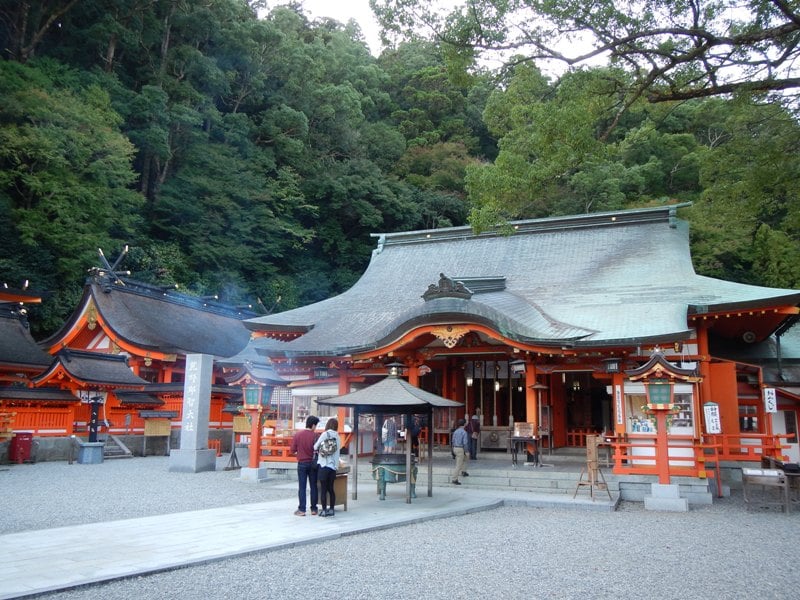
Kumano Kodo is a network of pilgrimage paths across the Kii Peninsula, leading towards the three grand shrines of Kumano Hongu Taisha, Kumano Hayatama Taisha and Kumano Nachi Taisha. Its history includes journeys by emperors and aristocrats, followed by generations of ordinary worshipers.
These sacred trails in Japan reflect the close relationship between nature worship, Shinto and Buddhism. Forest paths, small oji shrines and village settlements make the journey feel connected to religious life throughout the landscape. Parts belong to the UNESCO-listed Sacred Sites and Pilgrimage Routes in the Kii Mountain Range.
The Nakahechi route is a popular starting point. Takijiri-oji to Takahara is about four kilometers, but its steep ascent takes two to three hours. Short distances here should never be mistaken for effortless walking.
Reach Takijiri by bus from Kii-Tanabe Station, accessible by limited express from Osaka. For a multi-day journey towards Hongu, reserve accommodation before fixing daily stages. Spring and autumn are appealing, but check rainfall and trail alerts. Yunomine Onsen offers a welcome overnight stop near Hongu.
6. Mount Mitoku, Tottori

Mount Mitoku offers a concentrated pilgrimage experience within the sacred grounds of Sanbutsuji Temple. Its best-known sight is Nageiredo, a wooden hall built into a cliff recess, seemingly suspended above the mountainside.
Reaching the viewing area is part of the religious experience. This is an ascetic climb intended to sharpen awareness through physical effort. Tree roots, rocks and chains demand your attention, and the mountain setting helps explain why spiritual training developed here.
Allow roughly two hours for the return climb, plus time at the lower temple grounds. You view Nageiredo from the approach rather than walking inside the cliffside hall. The exposed sections make this unsuitable for anyone uncomfortable with heights or scrambling.
Solo climbing is prohibited, staff inspect footwear, and admission depends on safe conditions. Rain or snow can close the climb, so check before leaving. Travel to Kurayoshi Station and continue by local bus towards Mitokusan, checking connections. Nearby Misasa Onsen is a rewarding place to stay after a dry-weather visit in the snow-free season.
7. Shikoku Henro, Shikoku

The Shikoku 88 Temple Pilgrimage circles through Tokushima, Kochi, Ehime and Kagawa, visiting temples associated with Kukai, founder of Shingon Buddhism. It is among the most recognizable Japanese pilgrimage routes, often pictured through pilgrims wearing white clothing and carrying walking staffs.
Behind that image is the idea of dogyo ninin, travelling with Kukai as a spiritual companion. Understanding this belief gives the journey more meaning than simply counting temple visits.
The roughly 1,200-kilometre circuit usually takes 40 to 60 days on foot. Expect coastal roads, towns and demanding mountain approaches alongside quieter paths. You can also walk selected sections or return over several trips.
For an introduction, begin at Ryozenji temple. It’s about a 10-minute walk from Bando Station near Tokushima. Spring and autumn generally provide comfortable walking conditions. Plan accommodation around realistic distances and receive any osettai, gifts or assistance from local people, with gratitude. Such generosity is a valued tradition, never something visitors should expect.
8. Koyasan Choishi Michi, Wakayama
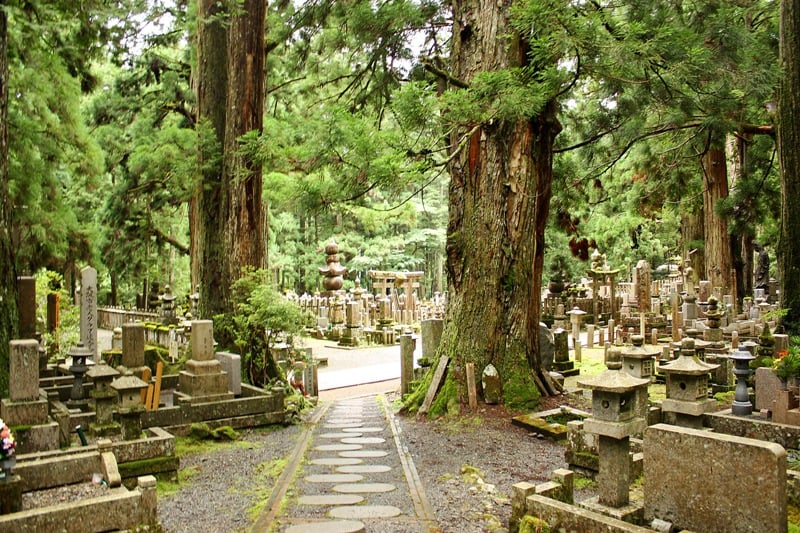
The Choishi Michi approaches Koyasan on foot from Jisonin Temple near Kudoyama. For travelers interested in the relationship between a pilgrimage and its destination, this is a particularly satisfying choice. You climb towards the religious settlement founded by Kukai, gradually leaving the lower countryside behind.
Its distinctive features are the choishi, tall stone markers shaped like Buddhist pagodas. There are 180 between Jisonin and Koyasan’s central Danjo Garan complex, with many surviving from medieval times. Following them gives the walk a visible connection with earlier pilgrims.
Allow a full day for approximately 20 to 21 kilometers, including sustained climbing. Around seven to eight hours with stops is a reasonable planning allowance for fit walkers.
From Osaka’s Namba Station, take Nankai trains towards Kudoyama and walk to Jisonin. Spring and autumn suit most visitors, but check official trail and wildlife notices before departure. Book a shukubo temple stay at Koyasan, then spend the following day exploring Danjo Garan and Okunoin rather than squeezing everything into your arrival afternoon.
9. Saigoku 33 Kannon Pilgrimage, Kansai Region of Japan
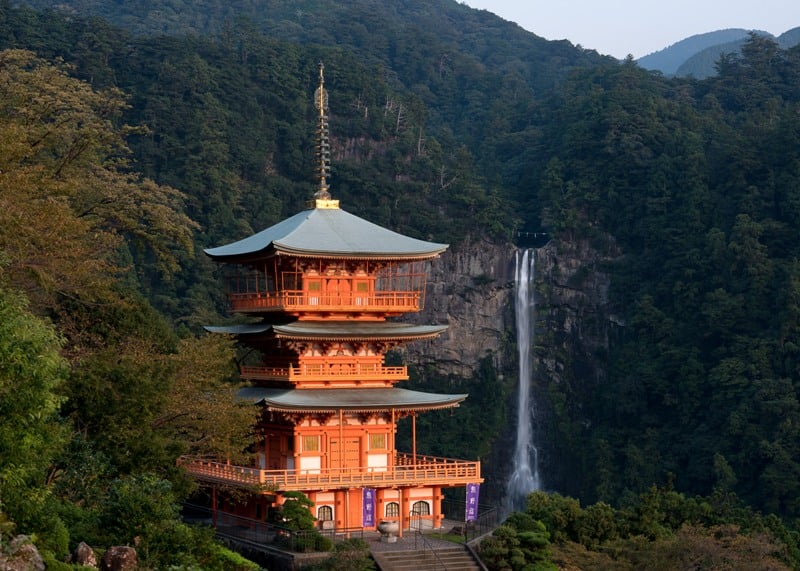
Also spelled Saikoku, this pilgrimage connects 33 Kannon temples across seven prefectures. The numbered circuit begins at Seigantoji near Nachi Falls and ends at Kegonji in Gifu, bringing together dramatically different landscapes.
That variety is its strongest attraction. Seigantoji places Buddhist worship beside Kumano’s waterfall landscape, while Kyoto’s Kiyomizudera and Nara’s Hasedera introduce other architectural settings and local traditions. Following the circuit gives familiar sightseeing stops a shared religious context.
This is best understood as a network of sacred destinations rather than one continuous forest trail. Some approaches involve substantial stairs, while others require longer public transport journeys or boat travel.
For a short holiday, choose temples around Kyoto, Osaka or Nara and explore them properly. To reach Seigantoji, travel to Kii-Katsuura and take a bus towards Nachisan. Spring and autumn are attractive, though famous blossom and foliage sites become busy. A pilgrimage stamp book can connect visits made over several journeys, allowing the circuit to develop gradually.
10. Mount Fuji Pilgrimage, Yamanashi

Mount Fuji is often approached as a climbing challenge, but its pilgrimage history starts below the summit. The traditional Yoshidaguchi route begins at Kitaguchi Hongu Fuji Sengen Shrine, where large trees and shrine buildings introduce the mountain as a sacred place.
Starting here changes the story of the visit. Instead of arriving high on the mountain by bus, you encounter the religious setting from which pilgrims began their ascent. Exploring the shrine and lower approach is worthwhile even if the summit is beyond your plans.
A complete ascent from the base requires considerably more time and stamina than the familiar fifth-station climb. Treat it as a separate itinerary, with suitable equipment, accommodation and preparation for altitude.
Travel from Tokyo via Otsuki to Fujisan Station, then take a local bus or taxi to the shrine. The usual Yoshida summit season is July 1 to September 10; confirm current entry rules and reservations. Book a mountain hut if climbing, or combine a gentler heritage visit with Lake Kawaguchi.
Before You Set Out Remember These!
Choose a journey that leaves time to understand the places you visit. Carry cash for transport, admissions, offerings and goshuin, the sacred stamps available at many temples and shrines. Worship before requesting one, and observe photography restrictions.
For rural and mountain routes, check weather, trail conditions, wildlife advice and return transport. Book your accommodation in advance. Walking a shorter section with care and curiosity can offer a richer experience than rushing to finish an entire circuit. Japan is a beautiful destination in the world offering you plenty of things to explore, not just these historic pilgrimage routes for sure.