
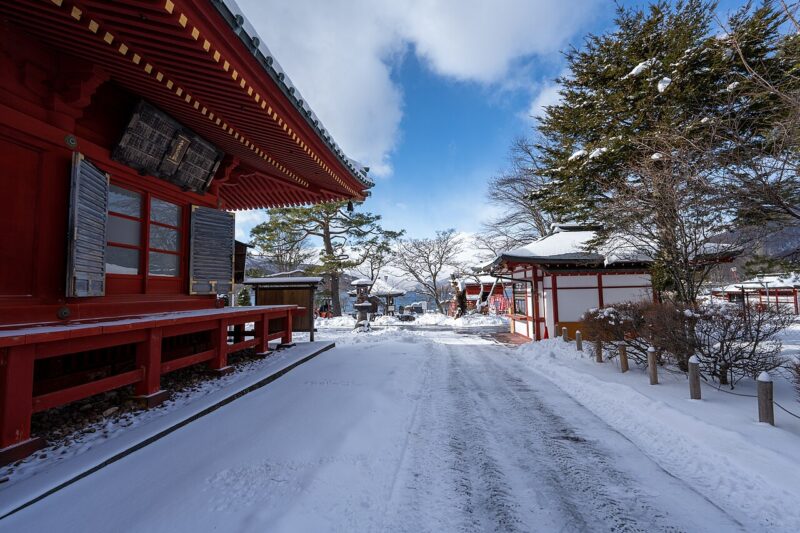
Planning a winter trip to Tokyo and hoping to spend a day in the snow? You do not need to travel all the way to Hokkaido. Mountain resorts, hot spring towns and snowy forests are within reach of the capital, with some surprisingly easy train connections.
The important part is choosing the right destination. A white Mount Fuji in the distance is lovely, but it is a different experience from walking through snow or taking children sledding. Some resorts also use snowmaking equipment, so snowy slopes do not necessarily mean the whole town will be white.
This guide brings together six of the best places to see snow near Tokyo, with practical transport advice and nearby attractions worth adding to your trip. You can enjoy every destination without being a skier.
When is the best time to see snow near Tokyo?
January and February are usually the best months for a snow trip from Tokyo. Natural snow cover is generally more established then, especially around Yuzawa and the mountains of northern Gunma. Tokyo itself occasionally receives snow, but it is too unpredictable to build a holiday around.
December can work once resorts open, although early-season coverage varies. Some higher resorts retain snow into March and beyond. Check live cameras on YouTube, snow reports and operating notices before booking; a planned opening date does not guarantee that every activity will be available.
Most importantly, snow on the ground and falling snow are different things. Even in a snowy destination, you may arrive on a bright, clear day.
1. GALA Yuzawa: the easiest snow day trip from Tokyo

If this is your first time seeing snow in Japan, GALA Yuzawa is an excellent starting point. Its biggest advantage is simple: the seasonal Shinkansen station connects directly to the resort building, saving you another mountain bus journey.
Take the gondola up to the snow area, enjoy the mountain scenery and leave time for a warm lunch. There is a dedicated snow-play park with separate sledding and free-play areas, making this a good option for families and visitors who have no interest in skiing.
You will need the appropriate tickets for the gondola and activities. Check the current snow-play package rather than automatically buying a full skiing pass. Waterproof footwear and gloves will make the day much more comfortable, particularly if you plan to sit or kneel in the snow.
How to get there from Tokyo: Take a seasonal Joetsu Shinkansen service from Tokyo Station to GALA Yuzawa Station. Allow roughly 75–90 minutes, depending on the service. Another option is Echigo-Yuzawa Station, with a resort shuttle connection; confirm the day’s timetable.
What else to visit: Stop at Echigo-Yuzawa Station for Ponshukan, where you can browse Niigata food specialties and sample local sake. It is an easy addition before heading home, without trying to squeeze in another distant attraction.
Suggested plan: Morning snow play, lunch at the resort, then an afternoon stop in Echigo-Yuzawa.
2. Karuizawa: snow play, cafés and shopping

Karuizawa suits travelers who want a little snow time alongside a more varied day out. The journey is short, and Karuizawa Prince Hotel Ski Resort sits close to the station.
There is an important distinction here: the resort uses snowmaking equipment extensively. You can find prepared snowy slopes when the surrounding town has little natural snow. Choose Karuizawa for convenience and organized snow activities; choose Yuzawa or Minakami if deep natural snow is your main priority.
For families, the resort’s Snowman Park offers an alternative to skiing. Check which park areas are open to day visitors and what the admission includes. You do not need to book a hotel stay simply to visit the main ski resort.
How to get there from Tokyo: Take the Hokuriku Shinkansen from Tokyo Station to Karuizawa Station, usually around 65–80 minutes on a suitable service. The resort is roughly a 10-minute walk from the station, although snow, luggage or young children may make a short taxi ride easier.
What else to visit: Karuizawa Prince Shopping Plaza is the simplest addition because it is beside the station. For a different atmosphere, take a local bus or taxi towards Old Karuizawa Ginza for shops and cafés. Kumoba Pond is another scenic option, but check path conditions before walking there in winter.
Suggested plan: Spend the morning at the snow park, then choose shopping or Old Karuizawa for the afternoon. Keeping to one extra area makes the day more enjoyable.
4. Minakami and Tanigawadake: snowy mountain scenery
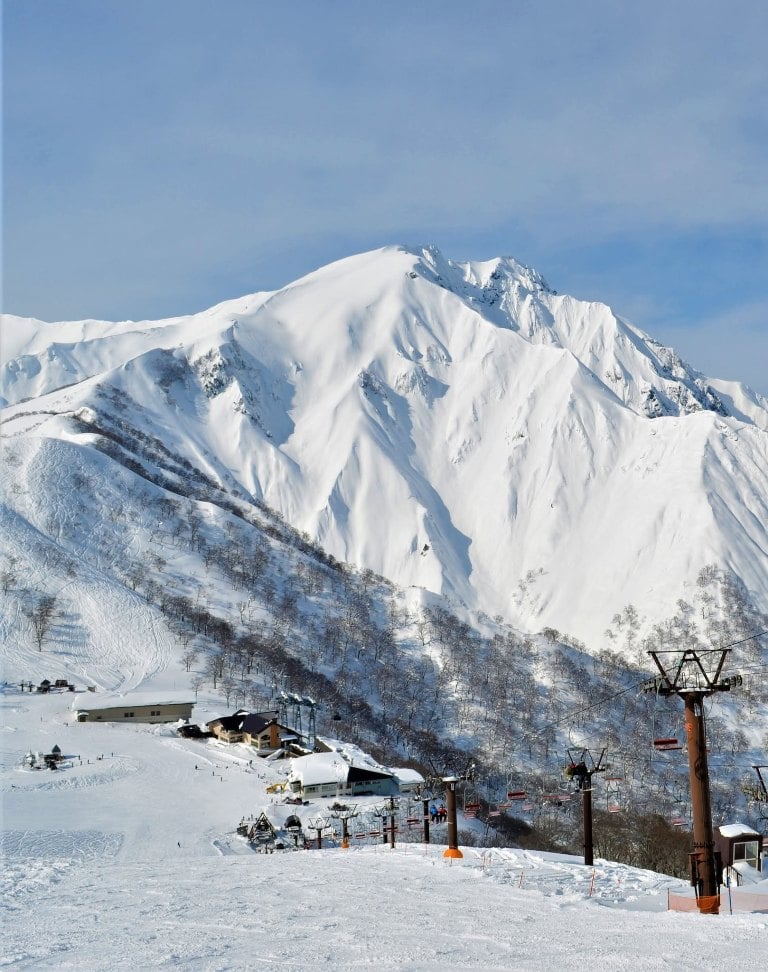
For a bigger mountain landscape, head to Minakami in northern Gunma. The area receives substantial winter snow, and the Tanigawadake Joch ropeway offers a way to enjoy the scenery without committing to a ski lesson.
The ropeway climbs to Tenjindaira, where the surrounding mountains feel far removed from Tokyo. On a clear day, the snowy ridgelines are the main attraction. This is a good choice for adults who would rather admire the landscape than spend the day in a children’s snow park.
Keep your plans flexible. Wind and heavy snow can suspend ropeway operations, and sightseeing access to any additional lifts must be checked separately. Stay within designated visitor areas; the mountains beyond the resort require winter mountaineering skills.
How to get there from Tokyo: Take the Joetsu Shinkansen from Tokyo Station to Jomo-Kogen Station, around 70 minutes. Continue by a bus bound for Tanigawadake Joch, approximately 45 minutes. Some buses finish at Minakami Station, so check the destination and return connections carefully.
What else to visit: Add lunch or a short stop in Minakami Onsen, the hot spring town beside the Tone River. Nearby Tanigawa Onsen also has bathing options for day visitors, though admission hours and transport need checking before you go.
Suggested plan: Visit the ropeway first while you have daylight and a clear view of the weather. Add an onsen only if the return timetable leaves enough room.
5. Okunikko: snowy forests and lakeside hot springs

Nikko often appears in Tokyo day-trip guides, but for winter snow, look beyond its famous shrine district. Okunikko, higher in the mountains, is the better target. Snow around central Nikko’s temples is much less dependable.
Yumoto Onsen, beside Lake Yunoko, makes a peaceful base for a winter stay. Guided snowshoe tours are offered in the Okunikko area, typically from January to March. They are a rewarding way to experience snowy woodland with someone who understands the local routes and conditions.
You can also enjoy the area at a gentler pace, combining accessible viewpoints with time in your accommodation’s hot spring bath. Ask the visitor centre which paths are suitable that day instead of assuming summer walking routes remain straightforward in winter.
How to get there from Tokyo: Take a Tobu limited express from Asakusa to Tobu-Nikko Station, around two hours. Then board a bus for Yumoto Onsen, taking approximately 85–90 minutes. Allow extra time for connections and winter road conditions.
What else to visit: Lake Chuzenji and Kegon Falls lie along the mountain bus corridor. In cold weather, ice can form around the falls, adding another reason to stop. Check viewing-area access before visiting.
Suggested plan: Stay one night, with Lake Chuzenji or Kegon Falls on one day and Yumoto on the other. Add Toshogu Shrine only with more time; fitting shrines, waterfalls and snowshoeing into one winter day would feel rushed.
5. Kusatsu Onsen: snow and a relaxing overnight stay

If your idea of winter in Japan includes steam rising into cold air and a hot bath after a snowy walk, Kusatsu deserves a place on your itinerary.
The town’s centrepiece is Yubatake, where hot spring water flows through wooden channels. Spend time exploring the surrounding streets, then return after dark to enjoy the illuminated setting. Snow cover varies, but the mountain location makes Kusatsu a much stronger winter choice than waiting for snow in Tokyo.
For dedicated snow activities, Kusatsu Onsen Ski Resort is close to town. Its children’s park provides snow-play options, so a visit can work even if nobody in your group skis. Check the current activity list and operating conditions before setting off.
How to get there from Tokyo: From Ueno Station, take a Limited Express Kusatsu-Shima train to Naganohara-Kusatsuguchi Station, then a connecting bus to Kusatsu Onsen Bus Terminal. Allow around three hours overall, depending on connections. The ski resort has a short shuttle connection from town; verify the seasonal schedule.
What else to visit: Walk towards Sainokawara Park and consider its open-air bath. You could also watch a yumomi performance at Netsunoyu, where long wooden paddles are used in a traditional water-cooling demonstration. Check performance times before planning your afternoon.
Suggested plan: Stay overnight at Kusatsu Onsen Hotel Village. Having time for snow play, a bath and an unhurried evening around Yubatake is worth the extra night.
6. Fujiten Snow Resort: snow play beneath Mount Fuji
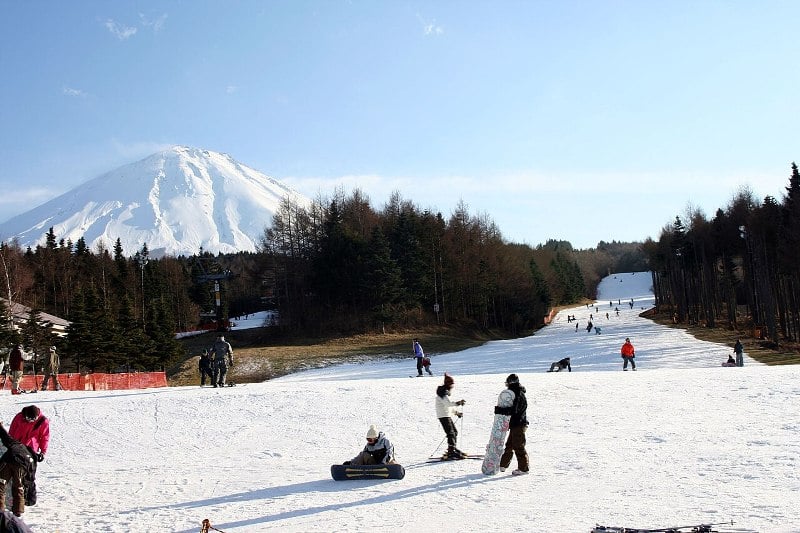
Fujiten is a good choice if you want to combine a snow experience with sightseeing around Lake Kawaguchi. On a clear day, Mount Fuji provides a memorable backdrop to the resort.
The dedicated snow-play zone at Chibikko Ai Land gives younger visitors somewhere to enjoy the snow without learning to ski. Snowmaking supports the resort’s winter operations, so do not expect the same deep natural snow landscape you might find in Niigata.
Also remember that snow on Mount Fuji does not guarantee snow beside Lake Kawaguchi. If touching snow is the purpose of your trip, plan to visit the resort rather than relying on the lakeshore being white.
How to get there from Tokyo: Take the reserved-seat Fuji Excursion limited express from Shinjuku to Kawaguchiko Station, approximately two hours. Continue by the seasonal paid Fujiten shuttle when operating, or a taxi, which takes roughly 20 minutes. Confirm shuttle dates, reservations and the return departure before booking your train.
What else to visit: Add a lakeside stop at Kawaguchiko. Oishi Park, on the northern shore, offers views across the water towards Mount Fuji, but it requires another local bus or taxi journey. Allow for that transfer rather than treating it as a quick station-side stop.
Suggested plan: Combine a half-day at Fujiten with one lake stop, or stay overnight for more flexibility. Mount Fuji can disappear behind cloud, so keep expectations realistic.
7. Icicles of Misotsuchi, Chichibu: a beautiful winter ice display

In search of a memorable winter day trip from Tokyo, head to Chichibu in Saitama to see the beautiful Icicles of Misotsuchi. Here, spring water seeping through the rocks freezes into a curtain of icicles beside the Arakawa River.
The site includes both natural formations and a larger display created by spraying water over the cliffs. Mid-January to mid-February is generally the main viewing period, with seasonal evening illuminations adding color to the ice. Opening dates depend on temperatures, so check the current season’s announcements before traveling. This is primarily an ice-viewing attraction; snow-covered surroundings are not guaranteed.
From Ikebukuro, take the Seibu limited express Laview to Seibu-Chichibu Station, around 80 minutes, then continue by a Seibu Kanko bus on the Mitsumine Shrine route, checking the seasonal stop and walking directions for the icicles. Confirm your return bus before staying for the illuminations.
Warm up afterwards at Café Woodroof near the viewing area. If you would prefer historic streets and food stops, Kawagoe is a good alternative on a separate day, with its traditional warehouse district and “Little Edo” atmosphere. It is approximately 30 minutes from Ikebukuro by Tobu Tojo Line express train, making it a simpler outing when you would rather avoid a mountain journey.
8. Hakone: hot springs and winter scenery, with a chance of snow

Hakone is a lovely winter escape from Tokyo, particularly if you want to combine sightseeing with a relaxing onsen stay. Snow does fall here during winter, but it should be treated as a welcome possibility rather than something you can count on for a particular date.
Check local cameras and weather reports before traveling if seeing snow is your main reason for visiting. Even without it, you can enjoy the mountain scenery, spend time around Lake Ashi and visit Hakone Shrine, then finish the day with a hot spring bath.
To get there, take the Odakyu Romancecar from Shinjuku directly to Hakone-Yumoto Station, approximately 85–90 minutes depending on the service. Remember that this brings you to Hakone’s gateway; reaching the lake and higher mountain areas requires additional travel by local transport.
Choose a few sights rather than trying to cover the whole region in one short winter day. An overnight stay gives you more time for a bath, a leisurely meal and sightseeing the following morning. Check transport updates during snowy weather, as snow and icy roads can affect your plans.
Practical tips for your Tokyo snow trip
Wear waterproof boots with good grip, warm socks, gloves and layers beneath a wind-resistant outer jacket. Bring spare socks for children and sunglasses for bright conditions. Ordinary city trainers quickly become uncomfortable in wet snow.
Check the complete cost before choosing a destination: return transport, local transfers, gondola admission, snow-park entry and clothing hire can add up. A non-skier’s ticket may differ from a ski lift pass, and rental packages do not always include gloves or footwear.
Book popular trains early, especially for weekends and holidays. Mountain buses can be infrequent, so save the return timetable before leaving the station. Recheck weather and operating notices on the morning of your trip.
For the simplest first snow day, choose GALA Yuzawa. For shopping alongside snow play, choose Karuizawa. If you can spare a night, Kusatsu or Okunikko gives you more time to enjoy winter beyond the slopes.